


What if your cloud stack suddenly had to prove every AI decision it made?
On August 2, 2026 the EU’s updated AI rules put high-risk obligations live, and cloud providers are front and center.
They’ll need immutable audit trails, dataset lineage, explainability artifacts, and hardware isolation for certain workloads.
That means rethinking storage, compute tenancy, and customer contracts, fast.
Bottom line: If you host, manage, or sell AI infrastructure in the EU, you must build or enable these controls now or face heavy fines and lost business.
Overview of Key 2026 EU AI Act Impacts on Cloud Service Providers
If you’re running a cloud business that touches the EU, August 2, 2026 is your hard deadline. That’s when the EU AI Act’s high-risk system rules go live. And they’re not light.
The Act sorts AI into four buckets: prohibited, high-risk, limited-risk, and minimal-risk. Each one carries different compliance weight. If you’re hosting or selling anything classified as high-risk, you’ll need continuous risk management, detailed technical docs before launch, human oversight baked in, and post-deployment monitoring. All of it.
This hits three big areas: data governance, logging, and cybersecurity. You’ve got to let customers track every piece of data from raw input through training and validation. You need immutable logs capturing predictions, outputs, and explainability artifacts. High-risk workloads often can’t run on shared infrastructure anymore. You’ll need single-tenant setups or hardware isolation using Intel TDX or AMD SEV-SNP. If you’re training general-purpose models that cross 10^25 FLOPs, you’ve got extra burdens: incident reporting to regulators and mandatory cybersecurity safeguards protecting models and physical compute.
Timelines are staggered but unforgiving. Prohibited practices became enforceable in February 2025. Transparency rules for general-purpose AI kicked in August 2025 for new models (existing ones get until August 2027). But the big one is August 2, 2026. High-risk system requirements activate in full. You need architecture audits done, immutable logging live, policy enforcement deployed, and contracts updated well before that date. Penalties go up to €35 million or 7% of worldwide revenue.
Cloud Provider Responsibilities Under the EU AI Act

Cloud providers sit in a weird spot. You’re often infrastructure host, platform provider, and sometimes AI-as-a-service operator all at once. The Act defines providers (whoever places AI systems on the market), deployers (whoever uses them), and importers. You need to figure out which hat you’re wearing for each service and put that in writing.
Even when you’re not the system provider, you’ve got to help customers meet their deployer obligations. That means auto-generated logs with retention periods, model provenance metadata, training-data summaries, and tools for fundamental-rights impact assessments when they’re deploying AI in essential public services. When you are the provider, managed ML platforms, pre-trained foundation models, inference APIs, you own the full stack: quality management systems, postmarket monitoring plans, regulatory reporting.
Here’s what you need to build or enable:
Immutable audit trails. WORM storage or blockchain-backed logs capturing every model inference, dataset version, config change. Tamper-evident signatures.
Data lineage tracking. Tools like OpenLineage and Marquez mapping the full chain of custody from raw training data through preprocessing, augmentation, model consumption.
Compute isolation. Dedicated hardware, confidential computing enclaves, jurisdictional sharding. No cross-customer data leakage in high-risk workloads.
Policy-as-code enforcement. Automated guardrails through Open Policy Agent or Kyverno preventing prohibited use cases and enforcing retention, access, and data-flow rules without manual oversight.
Incident detection pipelines. Real-time monitoring for serious incidents with automated workflows to regulators and customers.
Authorized representative support. Infrastructure and legal frameworks for non-EU customers to designate EU-based reps and maintain EU-localized docs and contact points.
AI System Risk Categories Relevant to Cloud Platforms
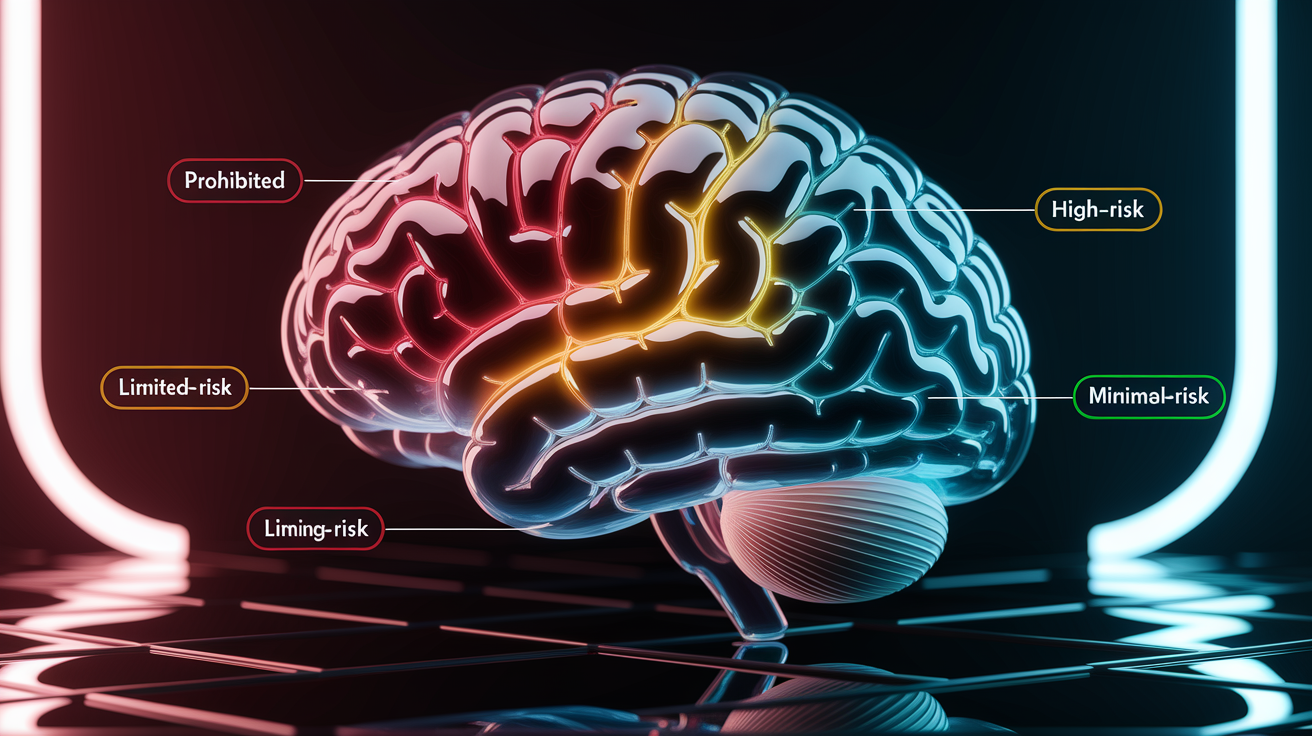
The EU AI Act’s risk taxonomy determines how heavy your compliance lift is. Prohibited AI practices are banned outright. Things like manipulating children’s behavior causing harm, real-time biometric ID in public spaces (except narrow law-enforcement carve-outs), social scoring by public authorities. Violations hit €35 million or 7% of global turnover. You need technical and contractual controls stopping customers from deploying prohibited systems on your infrastructure, even if you didn’t design the model.
High-risk AI triggers the heaviest requirements: continuous risk management, rigorous data governance for training and validation sets, comprehensive technical documentation finished before market placement, quality management systems, postmarket monitoring plans. High-risk categories include AI in employment decisions (resume screening, promotion algorithms), certain medical devices, education and vocational training, judicial and law-enforcement applications, access to essential services (credit scoring, benefit eligibility), critical infrastructure (water, gas, electricity networks), most biometric ID systems except narrow identity verification. If you’re hosting or offering high-risk AI, customers need to generate the required docs, maintain logs, and demonstrate ongoing risk controls. Or you implement these controls directly when you’re the system operator.
Limited-risk AI (chatbots, deepfake generators) requires transparency disclosures informing users they’re interacting with AI and labeling synthetic content in machine-readable formats. Minimal-risk systems (spam filters, recommendation engines) fall outside the Act’s direct scope but may still trigger GDPR obligations if processing personal data. You’ve got to help customers classify their workloads accurately and provision infrastructure matched to each tier’s requirements.
Infrastructure, Logging, and Transparency Requirements

High-risk AI systems demand infrastructure fundamentally different from conventional cloud workloads. The Act mandates traceability, explainability, and auditability at every layer. You’ve got to capture and retain immutable records of model predictions, decision factors influencing outputs, dataset versions used during training and inference, and the complete chain from input through output. This goes beyond application-level telemetry. You need infrastructure-level provenance: which compute nodes ran training jobs, which storage buckets held training data, which network paths connected data sources to model endpoints.
Technical requirements you need to satisfy or enable:
Tamper-evident log storage. WORM object storage, cryptographically signed append-only ledgers, or blockchain journals. Logs can’t be altered after creation and provide verifiable audit trails for regulatory inspection.
Dataset provenance and lineage tracking. Systems documenting every transformation applied to training data, validation splits, test datasets. Versioning granular enough to reproduce any historical model state.
Explainability artifact capture. Logs of feature importance scores, attention weights, counterfactual explanations accompanying each prediction. Enables retrospective analysis of model decisions.
Incident monitoring and alerting. Real-time detection of accuracy degradation, bias drift, adversarial inputs, security anomalies with automated escalation to compliance teams and regulators for serious incidents.
Access and usage audit trails. Records of which users, applications, or services queried models, retrieved training data, or modified configurations. Retention periods aligned to regulatory inspection timelines.
The Act’s transparency obligations create tension with GDPR’s “right to be forgotten.” Common workarounds: anonymizing personal identifiers in retained logs while preserving technical metadata necessary for compliance, or segregating personal data from technical audit trails using pseudonymization and secure multi-party computation. You need architectures supporting both regimes simultaneously, typically hybrid storage models keeping personal data in GDPR-compliant deletion-capable systems while maintaining immutable technical logs in separate WORM storage.
Cybersecurity requirements intensify for general-purpose AI models exceeding the 10^25 FLOPs systemic-risk threshold. You’ve got to implement demonstrable safeguards protecting model weights, training datasets, and compute infrastructure from unauthorized access, exfiltration, or tampering. This often requires hardware-based confidential computing (Intel TDX, AMD SEV-SNP), network segmentation isolating AI workloads from other tenants, and physical security controls over data centers hosting high-value models. Aligns with emerging sovereign cloud initiatives like EUCS certification and member-state programs such as France’s SecNumCloud.
Compliance Timelines and Enforcement Milestones Through 2026

| Milestone | Effective Date |
|---|---|
| Prohibited AI practices enforcement begins; baseline AI literacy obligations active | February 2, 2025 |
| General-purpose AI model transparency rules take effect for new models; EU AI Office, Scientific Panel, and AI Board operational | August 2, 2025 |
| High-risk AI system obligations and enforcement phase activate; regulatory sandboxes required in every Member State | August 2, 2026 |
| Pre-existing general-purpose AI models must comply; AI embedded in products under specific EU safety laws covered | August 2, 2027 |
The staggered timeline gives cloud providers a 24-month window from the Act’s August 1, 2024 entry into force until the critical August 2, 2026 enforcement milestone. Treat 2025 as the design and pilot phase. Conduct architecture gap analyses, implement immutable logging frameworks, deploy data lineage systems, and test policy-as-code enforcement in non-production environments. The February 2025 prohibited-practices deadline requires immediate action on use-case restrictions. The August 2025 general-purpose AI transparency deadline affects providers offering foundation models or hosting customer-trained models exceeding systemic-risk compute thresholds.
August 2, 2026 is the hard enforcement cutoff for high-risk systems. By that date, you need technical documentation templates done, quality management systems finalized, postmarket monitoring operational, and customer contracts updated allocating responsibilities between provider and deployer roles. Regulatory sandboxes (at least one per Member State) become available in mid-2026, offering supervised testing environments where you can validate compliance approaches and gain protection from administrative fines for issues discovered and remediated under sandbox supervision. The 2027 deadline primarily affects legacy general-purpose models and AI systems embedded in physical products (medical devices, automotive systems), giving cloud providers hosting or training such models an additional year to retrofit compliance controls.
Differences Between the EU AI Act and GDPR for Cloud Providers

The EU AI Act and GDPR impose overlapping but fundamentally distinct obligations on cloud providers. You need parallel compliance programs even though both regimes apply to AI systems processing personal data. GDPR centers on personal data protection, data subject rights, and lawful processing bases. It regulates what data is collected, how it’s used, and who controls it. The AI Act regulates AI system behavior, risk profile, and safety characteristics. Focuses on model outputs, decision-making processes, and societal impacts regardless of whether personal data is involved. A cloud provider hosting an AI-powered credit-scoring system faces GDPR obligations if the system processes applicant names, addresses, or financial histories, and simultaneously faces AI Act obligations because credit scoring is classified as high-risk under Annex III.
The regimes differ sharply in their accountability models and compliance gates. GDPR requires demonstrating lawful basis, purpose limitation, data minimization, and subject rights throughout data processing lifecycles. Data Protection Impact Assessments (DPIAs) required for high-risk processing. The AI Act mandates pre-market technical documentation, lifecycle risk management, quality management systems, and continuous postmarket monitoring for high-risk systems. Obligations tied to the AI system itself rather than the data it processes. GDPR penalties reach €20 million or 4% of global annual turnover. AI Act penalties reach €35 million or 7% for prohibited practices and €15 million or 3% for other violations. Both regimes enforceable simultaneously when personal data and high-risk AI intersect.
Operational tensions arise around data retention and deletion. GDPR’s right to erasure requires you to delete personal data upon valid requests, while the AI Act mandates retaining logs, decision provenance, and technical audit trails for regulatory inspection. You’ve got to implement architectural separation. Anonymize or pseudonymize personal identifiers in AI Act compliance logs while maintaining deletion-capable personal data stores satisfying GDPR. Document the technical measures bridging both obligations. Assign distinct functions (analogous to Data Protection Officers under GDPR) to oversee AI Act compliance, maintain required documentation, and coordinate with national enforcement authorities and the EU AI Office as governance structures operationalize through 2026.
Liability and Shared Responsibility Models

The EU AI Act allocates responsibilities across multiple operator categories: providers, deployers, importers, authorized representatives, and distributors. Forces cloud vendors to update the shared responsibility frameworks inherited from GDPR and infrastructure-as-a-service models. Providers (organizations placing AI systems on the market or putting them into service under their own name) bear primary liability for pre-market compliance: technical documentation, risk management, quality systems, and postmarket monitoring. Deployers (organizations using AI systems under their own authority) must operate systems according to instructions, maintain usage logs, perform fundamental-rights impact assessments for public-service deployments, and monitor for drift or anomalies during operation.
Cloud providers occupying dual roles face compounded obligations. When offering managed AI services (pre-trained models, AutoML platforms, or inference APIs), the vendor is the provider and assumes full Article 6 compliance burdens. When providing raw compute, storage, and networking for customers to train and deploy their own models, the cloud vendor typically remains an infrastructure host with narrower duties: ensuring infrastructure security, enabling customer logging and monitoring, and potentially supporting authorized representative arrangements for non-EU deployers. Ambiguity arises in platform-as-a-service scenarios where the cloud vendor supplies MLOps pipelines, model registries, or governance tooling. These configurations may shift portions of provider responsibility onto the platform operator depending on the degree of control exercised over model design, training data, and deployment.
Contracts must explicitly delineate these boundaries. Update terms of service, SLAs, and data processing agreements to specify which party holds provider vs deployer obligations for each service tier, allocate liability for fines and regulatory actions, and define indemnification terms. For non-EU providers offering high-risk AI systems or general-purpose models with systemic-risk characteristics to EU customers, the Act mandates appointing an EU-based authorized representative. Typically requires legal entity establishment, local documentation storage, and regulatory liaison capabilities. Cloud vendors targeting EU markets should build authorized representative infrastructure into standard service offerings and price compliance support into commercial models to avoid leaving enterprise customers exposed to extraterritorial enforcement gaps.
Technical Adaptation Strategies for Cloud Providers

Cloud providers need to re-architect AI infrastructure to satisfy the EU AI Act’s traceability, explainability, and auditability mandates. Changes span compute isolation, storage immutability, observability tooling, and governance automation. The core technical challenge is instrumenting every layer of the AI lifecycle (data ingestion, preprocessing, training, validation, deployment, inference, and monitoring) to produce compliance-grade evidence without introducing latency, cost, or complexity that renders AI workloads commercially unviable. Adopt a compliance-by-design approach embedding regulatory primitives directly into platform services rather than retrofitting controls onto legacy architectures.
Compute isolation and confidential computing represent the first adaptation priority for high-risk workloads. Multi-tenant GPU pools and shared Kubernetes clusters (standard cloud configurations optimizing hardware utilization) can’t demonstrate the tenant separation and data-in-use protection required under the Act. You need to offer dedicated single-tenant compute options, hardware-backed trusted execution environments (Intel TDX, AMD SEV-SNP), and jurisdictional sharding keeping training data, model weights, and logs within specific EU member states to satisfy data localization and sovereignty requirements. These configurations increase cost and reduce utilization efficiency but provide the audit evidence and regulatory assurance high-risk deployers demand.
Key adaptation strategies you should implement:
Data lineage and provenance automation. Deploy OpenLineage, Marquez, or equivalent frameworks capturing dataset versions, transformation pipelines, and dependency graphs automatically as part of MLOps workflows. Expose lineage metadata through APIs and dashboards customers can include in regulatory submissions.
Immutable audit storage. Provision WORM object storage, blockchain-backed ledgers, or cryptographically signed append-only logs as default options for AI workloads. Retention policies aligned to expected inspection timelines and integration with SIEM and compliance-monitoring tools.
Policy-as-code and automated enforcement. Embed Open Policy Agent, Kyverno, or cloud-native policy engines into Kubernetes control planes, CI/CD pipelines, and API gateways to prevent prohibited use cases, enforce access controls, and audit configuration changes without relying on manual review.
Explainability and model observability tooling. Integrate feature-importance tracking, attention visualization, counterfactual explanation engines, and drift-detection libraries into managed ML platforms. Expose explainability artifacts alongside predictions for downstream compliance workflows.
Compliance dashboards and evidence generation. Build customer-facing portals aggregating logs, lineage graphs, risk assessments, and documentation templates. Enable one-click export of compliance evidence packages for regulatory inspections or third-party audits.
Business Model and Cost Implications

EU AI Act compliance imposes both one-time re-engineering costs and recurring operational expenses that will reshape cloud AI pricing models, service portfolios, and market segmentation strategies. One-time costs include conducting AI system inventories, implementing immutable logging and lineage tracking, re-architecting compute infrastructure for isolation and confidential computing, updating contracts and terms of service, and training staff on AI literacy and governance obligations. Industry estimates for a single high-risk AI model’s annual compliance burden (covering documentation, oversight, and testing) range from €29,000 to €71,000 depending on complexity. One-time quality management system setup potentially reaches €193,000 to €330,000 for comprehensive frameworks.
Recurring costs compound over time. Immutable storage consumes additional capacity that can’t be reclaimed through deletion or compression, driving up long-term storage expenses. Dedicated compute resources and single-tenant configurations reduce utilization rates and increase per-workload infrastructure costs. Compliance staffing (analogous to Data Protection Officers under GDPR) adds headcount for legal, technical, and risk functions. Model retraining and validation cycles required for postmarket monitoring add 1–4% to annual AI budgets per iteration. For cloud providers, these costs translate into higher list prices for compliance-grade AI services, tiered pricing separating minimal-risk and high-risk workloads, and premium charges for features like EU-localized compute, authorized representative support, and turnkey compliance evidence generation.
Strategic implications extend beyond pricing adjustments. Cloud providers that embed compliance primitives into platform defaults (immutable logs, policy enforcement, lineage tracking, and explainability tooling) gain competitive advantage in the EU market, particularly among enterprise customers in regulated industries (finance, healthcare, public sector) where high-risk AI deployments are concentrated. Early adopters of compliance-by-design can capture EU procurement spending and funding from programs like Horizon Europe and Digital Europe subsidizing sovereign cloud and AI governance investments. Providers delaying adaptation risk multi-million-euro fines tied to global turnover, emergency re-engineering ahead of the August 2026 deadline, and market-share loss to competitors offering turnkey compliance solutions. The Act creates a compliance-services market opportunity (governance-as-a-service, certified secure enclaves, audit-ready logging, and regulatory sandbox access) that forward-looking providers should productize as differentiated offerings rather than treating compliance solely as cost overhead.
Final Words
Core obligations kick in in 2026: tiered risk classes, transparency duties, and bigger documentation and logging requirements that will change how cloud platforms support AI workloads. Providers will need traceability, monitoring, and clearer shared‑responsibility playbooks.
Timelines are staggered, so start updating contracts, tooling, and risk controls now to reduce friction and cost later.
The impact of eu ai 2026 on cloud service providers is real but manageable — with early planning and better controls it can become a differentiator.
FAQ
Q: What are the core obligations for cloud providers under the 2026 EU AI Act?
A: The core obligations for cloud providers under the 2026 EU AI Act are to enable client compliance with logging, documentation, model‑risk visibility, transparency features, secure infrastructure, and support for audits and technical documentation.
Q: How will the EU AI Act change cloud providers’ day-to-day operations like data governance and logging?
A: The EU AI Act will require cloud providers to strengthen data governance, keep detailed audit logs, implement monitoring and risk controls, tighten access management, and support incident reporting for AI workloads.
Q: What readiness timelines apply to foundation models, high‑risk systems, and general‑purpose AI through 2026?
A: The readiness timelines require earlier obligations for foundation models, staggered rules for general‑purpose AI, and full enforcement for high‑risk systems by 2026, so providers must phase implementations now.
Q: What must cloud providers offer customers to help them comply with the AI Act?
A: Cloud providers must offer customers traceable logs, technical documentation exports, model provenance tools, risk reporting hooks, secure compute isolation, and interfaces for compliance evidence and audits.
Q: How does the AI Act classify AI system risks and why does that matter for cloud platforms?
A: The AI Act classifies systems as minimal, limited, high, or unacceptable risk; those classifications determine provider duties, with high‑risk systems demanding stricter logging, monitoring, and documentation support from cloud platforms.
Q: What specific logging and transparency features will be required from cloud infrastructure?
A: The required logging and transparency features include immutable audit logs, runtime monitoring, dataset access tracking, model versioning records, and incident and change‑management documentation for AI workflows.
Q: How does the EU AI Act differ from GDPR for cloud providers?
A: The EU AI Act differs from GDPR by focusing on system safety, model behavior, and risk management rather than solely personal data protection; both can overlap but enforce different controls and accountability scopes.
Q: Who bears liability under the AI Act and how should shared responsibility be structured in cloud environments?
A: Liability under the AI Act is distributed among developers, deployers, importers, and distributors; cloud providers should define clear shared‑responsibility contracts, mapping specific compliance duties and evidence obligations to each party.
Q: What technical adaptations should cloud providers implement to meet the Act’s requirements?
A: Cloud providers should implement monitoring and evaluation tools, compliance dashboards, risk‑scoring engines, secure tenancy and access controls, model governance APIs, and standardized exportable documentation formats.
Q: How will complying with the AI Act affect cloud pricing and business models?
A: Complying with the AI Act will likely increase operational costs for enhanced logging, security, and compliance tooling, prompting providers to adjust pricing, offer compliance tiers, or value‑add managed services for EU customers.
Q: What immediate steps should providers take now to prepare for 2026 enforcement?
A: Providers should inventory AI workloads, map client responsibilities, deploy logging and traceability features, build compliance APIs, update contracts, and run pilot audits to identify gaps before 2026 enforcement.
Q: Which AI systems are typically classified as high‑risk and need extra cloud‑side safeguards?
A: Systems used for critical infrastructure, employment decisions, biometric identification, legal or healthcare outcomes, and safety‑critical operations are typically high‑risk and require heightened traceability, monitoring, and security.