

Think Apple has ended tracking for good? Not exactly.
Between 2024 and early 2026 Apple tightened how apps collect and share data—adding mandatory Privacy Manifests, testing granular App Tracking Transparency, turning on fingerprinting protections in Safari, and limiting carrier-derived precise location.
Those moves give users clearer choices and block common advertiser workarounds, while forcing apps to disclose third-party SDKs and data-broker ties.
This post explains what changed, who benefits, and the practical steps you should take now to protect your data rights.
Immediate Overview of Recent Apple Privacy Policy Changes

Apple rolled out a bunch of privacy policy changes between 2024 and early 2026 that completely reshape how apps collect, share, and admit to user data tracking. The newest stuff includes fingerprinting protection that’s on by default in Safari 26 (dropped September 2025), granular App Tracking Transparency consent testing in the iOS 18.5 beta (April 2025), and Limit Precise Location in iOS 26.3 (early 2026), which dials down how accurately mobile carriers can figure out where you are using cell towers. All of this builds on the Privacy Manifest requirement from May 2024, forcing App Store apps to declare SDK data habits and tracking behavior in a standardized file.
The tracking crackdown got stricter throughout 2024–2026. App Tracking Transparency (ATT) first showed up in iOS 14.5 back in April 2021. Now in iOS 18.5 beta, you can allow some tracking categories—say, analytics—while blocking targeted ads. Private Click Measurement (PCM), Apple’s privacy-first attribution system, still works without cookies, waits randomly between 24 and 48 hours to send attribution reports, and processes everything on-device to strip out who you are. Safari 26 automatically yanks tracking parameters from URLs whether you’re in normal or Private Browsing mode and blocks common fingerprinting tricks by default.
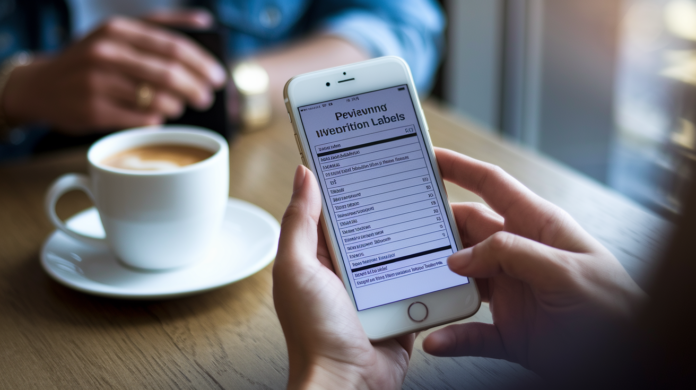
Disclosure rules expanded right alongside enforcement. Privacy Nutrition Labels have been mandatory since late 2020. They show categories like contact info, location, and financial data on every App Store listing so you can check what an app does before downloading. The May 2024 Privacy Manifest goes deeper, requiring apps to list which third-party SDKs they’ve bundled and whether those SDKs connect to data brokers—companies that collect and sell personal information without ever talking to you directly. Apple also introduced App Privacy Report in iOS 15 (September 2021), iCloud+ features like Mail Privacy Protection (which hides your IP and email opens), Private Relay, and Hide My Email, then rolled out Link Tracking Protection across Safari, Messages, and Mail in iOS 26.
Top five recent changes you need to know right now:
- Granular ATT consent (iOS 18.5 beta, April 2025) – testing whether you can allow or block specific tracking types instead of all or nothing.
- Privacy Manifest (May 2024) – apps publish a structured file listing data collection, SDK usage, and data-broker connections.
- Default fingerprinting protection (Safari 26, September 2025) – blocks fingerprinting APIs and strips tracking IDs from links automatically.
- Limit Precise Location (iOS 26.3, early 2026) – reduces carrier-derived location accuracy outside app permissions.
- Link Tracking Protection (iOS 26, June 2025) – removes tracking parameters from URLs in Safari, Messages, and Mail.
Key Apple Privacy Policy Shifts Explained Through Feature Changes

Apple’s policy evolution centers on transparency-first design. You see what data apps want before you download. You get explicit prompts before cross-app tracking starts. And you benefit from on-device processing that keeps personal information local. The company replaced opaque, opt-out tracking with mandatory disclosures and affirmative consent, moving power toward you and away from third-party data brokers and advertisers.
Privacy Nutrition Labels
Privacy Nutrition Labels sit on every App Store product page and list the types of user data an app collects or requests. Examples include contact information (name, email, phone number), precise or coarse location, financial data (payment info, credit history), browsing history, search history, identifiers used for tracking, and usage data. Developers self-report these categories. Apple spot-checks submissions and can pull apps that don’t disclose accurately. The labels let you compare privacy practices across competing apps at a glance, sort of like comparing ingredients on food packaging, before you commit to a download.
App Tracking Transparency (ATT)
App Tracking Transparency requires apps to ask for your explicit permission before tracking data “across apps or websites owned by other companies.” Any app that shares user or device information with data brokers or passes identifiers to third-party analytics and advertising SDKs must display a system prompt and get opt-in consent. Apple introduced ATT in iOS 14.3 (December 2020) and started enforcing it in iOS 14.5 (April 2021). Since enforcement began, about 95 percent of U.S. users have opted out of tracking. The iOS 18.5 beta (April 2025) tests granular consent, letting you approve analytics tracking while blocking targeted advertising, or the other way around.
Private Click Measurement (PCM)
Private Click Measurement is Apple’s answer to traditional cookie-based ad attribution. PCM sends attribution reports that contain limited campaign data but no individual user identifiers. It runs in a dedicated Private Browsing context without any cookies, delays reports randomly between 24 and 48 hours to disconnect events in time, and handles aggregation on-device to minimize exposure of user signals. Advertisers can still measure whether an ad click led to a conversion—purchase, sign-up, download—but they lose the ability to build detailed cross-site user profiles or perform real-time, deterministic attribution at the individual level.
Previous behavior vs. new requirements:
- Third-party cookies – used to persist indefinitely. Now CNAME-cloaked third-party cookies expire in seven days (Safari 14, November 2020).
- Cross-site tracking – used to be allowed by default. Now blocked unless explicit ATT consent is granted.
- IDFA access – used to be available without a prompt. Now requires ATT opt-in (enforcement began April 2021).
- Attribution timing – used to be real-time. PCM delays reports 24–48 hours and aggregates on-device.
- Data-broker relationships – used to be undisclosed. Apps now must declare data-broker ties in Privacy Nutrition Labels and Privacy Manifests.
- Fingerprinting APIs – used to be accessible. Safari 26 blocks common fingerprinting surfaces by default (September 2025).
Timeline of What Changed in Apple Privacy Policy from 2017 to 2026

Apple started restricting cross-site tracking with Intelligent Tracking Prevention (ITP) in 2017 and expanded privacy controls across iOS and Safari through iterative updates. Each release tightened the surfaces available for tracking, closed known workarounds, and added new user-facing transparency features.
The timeline below captures the major policy and technical changes between 2017 and early 2026. Version numbers and release dates are preserved where known, and key enforcement milestones—like the shift from announcement to required compliance—are marked explicitly.
| Year/Version | Key Privacy Change |
|---|---|
| June 2017 (Safari 12 / iOS 11) | Intelligent Tracking Prevention (ITP) 1.0 announced; limited third-party cookies and cross-site tracking. |
| September 2018 (ITP 2.0) | Removed 24-hour cookie access window; stricter rules on first-party cookies set by third-party scripts. |
| March 2019 (ITP 2.1) | Introduced seven-day cap on script-writable storage (including cookies) to limit long-term tracking. |
| September 2019 (ITP 2.2 & 2.3) | Further shortened cookie lifespans and blocked known marketer workarounds. |
| November 2020 (Safari 14) | CNAME-cloaking defense: all cookies created by third-party CNAME-cloaked responses expire in seven days. |
| December 2020 (iOS 14.3) | App Tracking Transparency (ATT) requirement introduced; apps must request explicit permission to track. |
| April 2021 (iOS 14.5) | ATT prompts became mandatory; approximately 95% of U.S. users began opting out of tracking. |
| September 2021 (iOS 15) | Mail Privacy Protection (hides IP and email opens), Hide My Email, iCloud+ Private Relay, and App Privacy Report launched. |
| September 2023 (Safari in iOS 17) | Link Tracking Protection removed tracking IDs from URLs in Messages and Mail; private tabs auto-lock and disable extensions by default. |
| May 2024 | App Store apps required to include a Privacy Manifest detailing data collection, SDK usage, and data-broker relationships. |
| April 2025 (iOS 18.5 beta) | Granular ATT consent testing introduced—users can allow analytics tracking while denying targeted advertising, or vice versa. |
| September 2025 (iOS 26 / Safari 26) | Default-on fingerprinting protection blocks common APIs; Link Tracking Protection expanded across Safari, Messages, and Mail; on-device Apple Intelligence keeps personal data local; quantum-secure TLS and wired accessory permission controls added. |
These changes climb through three clear phases. From 2017 to 2020, Apple focused on browser tracking prevention. ITP versions progressively shortened cookie lifespans and closed CNAME-cloaking loopholes. From late 2020 through 2021, the company took privacy controls to the OS level with ATT, IDFA opt-in, and iCloud+ services that hide network activity and email behavior. From 2023 onward, Apple added granular user controls (iOS 18.5 beta ATT), mandated developer transparency (Privacy Manifest), hardened Private Browsing and fingerprinting defenses (Safari 26), and introduced Limit Precise Location (iOS 26.3, early 2026) to tackle carrier-derived location tracking outside app permissions. Pattern here is clear: iteratively restrict tracking surfaces and close workarounds as they pop up.
How Apple’s Privacy Changes Affect Tracking, IDFA, and Attribution

Apple’s shift from opt-out to opt-in tracking fundamentally changed mobile advertising. The Identifier for Advertisers (IDFA), a device identifier used to link user behavior across apps and build targeting profiles, moved behind the App Tracking Transparency prompt in iOS 14.3 (December 2020) and became enforceable in iOS 14.5 (April 2021). Before ATT, advertisers accessed IDFA by default. Users had to dig deep into settings to disable tracking. After ATT, apps must display a system permission request and you must affirmatively opt in. Since April 2021, roughly 95 percent of U.S. users have declined tracking, eliminating deterministic cross-app attribution for the overwhelming majority of iOS devices.
The loss of IDFA forced advertisers to adopt probabilistic matching, contextual targeting, and Apple’s privacy-preserving attribution frameworks: SKAdNetwork and Private Click Measurement. SKAdNetwork aggregates campaign data and reports conversions with a delay and without individual user identifiers. Private Click Measurement (PCM) replaces cookie-based web attribution with an on-device, delayed-reporting system that strips personally identifiable information, processes results locally, and randomly delays reports between 24 and 48 hours. Safari 14 (November 2020) added a defense against CNAME cloaking, forcing all third-party cookies set via CNAME-cloaked domains to expire in seven days. Safari 26 (September 2025) blocks access to common fingerprinting APIs by default, removing fallback methods advertisers used to identify users without cookies or IDFA.
Technical limitations introduced by Apple’s privacy changes:
- IDFA access gated behind ATT prompt – no deterministic device identifier without explicit user consent (April 2021).
- Third-party cookie lifespan capped at seven days for CNAME-cloaked responses (Safari 14, November 2020).
- Cross-site storage and tracking restricted by ITP 2.x series (2018–2020) and ongoing Safari updates.
- Fingerprinting APIs blocked by default in Safari 26 (September 2025), removing device canvas, font enumeration, and sensor access used for probabilistic identification.
- Attribution reporting delayed 24–48 hours and aggregated on-device via PCM, eliminating real-time, user-level campaign measurement.
- Mail open and IP tracking defeated by Mail Privacy Protection (iOS 15, September 2021), which prefetches content via proxy and hides user IP addresses.
- Link tracking parameters stripped automatically in Safari, Messages, and Mail (iOS 26, September 2025), breaking URL-based cross-site user matching.
The net result is a shift from individual-level, real-time attribution to aggregated, delayed measurement. Advertisers can still assess campaign performance—click-to-conversion rates, aggregate return on ad spend, broad audience segments—but lose the ability to build granular user profiles, perform frequency capping at the individual level, or run sophisticated retargeting and lookalike modeling without first-party data. Measurement becomes coarser, attribution windows widen, and fraud detection relies more on statistical anomalies than deterministic device or user tracking.
Apple Privacy Labels, Manifests, and Required Developer Disclosures

Privacy Nutrition Labels, introduced in late 2020, appear on every App Store listing and require developers to self-report which categories of user data their app collects. Categories include identifiers (device ID, user ID, advertising ID), contact information, location (precise or coarse), financial information, health and fitness data, browsing and search history, purchases, usage data, diagnostics, and any data linked to your identity or used for tracking. Apple reviews submissions and can reject updates or pull apps that provide inaccurate or incomplete disclosures. You see the labels before downloading, which lets you compare privacy practices side by side.
In May 2024, Apple added the Privacy Manifest requirement. A Privacy Manifest is a machine-readable file bundled inside an app binary that declares which third-party SDKs are included, what types of data each SDK accesses, whether the app or its SDKs connect to known data brokers, and which “required reason” APIs the app calls. Functions Apple has flagged as commonly abused for tracking. The manifest formalizes and extends the label disclosure, making it verifiable at the code level and enforceable during App Store review. Developers must update manifests with each release and justify any use of sensitive APIs by selecting from Apple’s predefined list of acceptable reasons.
Apple enforces these requirements through automated and manual App Store review. Apps that skip Privacy Nutrition Labels or submit incomplete information face rejection or removal. Apps that don’t include a valid Privacy Manifest after the May 2024 deadline can’t submit new versions. Apple also runs App Privacy Report (introduced in iOS 15, September 2021), a built-in dashboard that logs which apps access location, photos, camera, microphone, and contacts in real time, and which domains apps contact in the background. This transparency lets you audit actual app behavior and compare it against the disclosed label and manifest.
| Requirement | What Developers Must Provide |
|---|---|
| Privacy Nutrition Labels | Self-reported list of data types collected (identifiers, location, financial data, etc.), displayed on App Store listing before download. |
| Privacy Manifest (May 2024) | Machine-readable file declaring third-party SDKs, data-broker connections, and “required reason” API usage with justifications. |
| Data-Broker Disclosure | Apps must declare if they or their SDKs tie into companies that collect and license personal information without a direct user relationship. |
| App Privacy Report (iOS 15+) | Real-time logging of sensor access (location, camera, microphone, photos, contacts) and network domains contacted, available to users in Settings. |
User-Facing Privacy Features That Reflect Apple’s Policy Changes

Apple’s policy updates translated into a bunch of user-facing controls and protections that work automatically or with minimal setup. Mail Privacy Protection, part of iCloud+ launched in iOS 15 (September 2021), hides your IP address and prefetches email content via proxy servers, defeating open-tracking pixels and geographic profiling. Hide My Email generates unique, random email addresses that forward to your real inbox, letting you sign up for services without exposing your primary address. Private Relay routes Safari traffic through two separate relays—one run by Apple, one by a third party—so no single entity sees both your identity and the sites you visit. (Private Relay doesn’t fully conceal identity from websites. It hides IP and rough location but doesn’t work like a full VPN or anonymity tool.)
Private Browsing in Safari got major upgrades in iOS 17 (September 2023) and Safari 26 (September 2025). Private tabs now lock automatically when idle and require Face ID or Touch ID to reopen. Extensions are disabled by default in Private Browsing mode to prevent tracking via add-ons. Link Tracking Protection, expanded across Safari, Messages, and Mail in iOS 26 (June 2025), strips known tracking parameters from URLs before you navigate, breaking cross-site user matching via link decoration. Limit Precise Location, introduced in iOS 26.3 (early 2026), reduces the accuracy of location data mobile carriers can infer from cell towers. Addresses a privacy gap outside app permissions. On-device Apple Intelligence, unveiled at WWDC in June 2025 and shipped with iOS 26, processes Siri requests, predictive text, and personal recommendations locally, keeping sensitive data on the device instead of uploading it to cloud servers.
Major user-facing features introduced or expanded 2021–2026:
- Mail Privacy Protection – hides IP address and defeats email open tracking (iOS 15, September 2021).
- Hide My Email – generates random forwarding addresses for sign-ups (iOS 15, September 2021).
- Private Relay – routes Safari traffic through dual relays to obscure IP and coarse location (iOS 15, September 2021).
- Private Browsing enhancements – auto-lock with Face ID, disabled extensions, and separate search engine settings (iOS 17, September 2023; Safari 26, September 2025).
- Link Tracking Protection – removes tracking parameters from URLs in Safari, Messages, and Mail (iOS 26, June 2025).
- Limit Precise Location – reduces carrier-derived location accuracy outside app permissions (iOS 26.3, early 2026).
These features shift privacy control from reactive opt-out buried in settings to automatic, default-on protections that require no action from you. The combination of on-device processing, network obfuscation, and link sanitization reduces the data exhaust you leave across apps, websites, and email services. If you want granular control, you can still drill into Settings → Privacy & Security to review ATT choices, manage location permissions, audit app access via App Privacy Report, and toggle Mail Privacy Protection or Private Relay on or off.
Developer and Business Impact of Apple’s Privacy Updates

Apple’s privacy changes fundamentally disrupted ad-supported business models and forced developers to rethink measurement, targeting, and monetization. The introduction of App Tracking Transparency and the resulting 95 percent opt-out rate among U.S. users eliminated deterministic IDFA-based attribution for the vast majority of iOS devices. Advertisers lost the ability to track users across apps, build detailed behavioral profiles, run precise lookalike and retargeting campaigns, and measure individual conversion funnels in real time. Facebook, Google, and other ad platforms publicly warned that the changes would cut ad revenue and targeting precision. Internal estimates suggested double-digit percentage drops in campaign effectiveness for many advertisers.
Private Click Measurement’s 24–48 hour delay and on-device aggregation introduced additional friction. Marketers used to real-time dashboards and granular attribution now face lagged, coarsened signals. Safari’s seven-day cap on CNAME-cloaked third-party cookies (introduced November 2020 in Safari 14) closed a popular workaround, and Safari 26’s default fingerprinting protections (September 2025) removed probabilistic fallback methods like canvas fingerprinting, font enumeration, and accelerometer/gyroscope access. The Privacy Manifest requirement (May 2024) increased compliance overhead, forcing developers to audit third-party SDKs, declare data-broker relationships, and justify use of sensitive APIs with acceptable-reason codes. The EU Digital Markets Act prompted Apple to allow non-WebKit browser engines in the EU (iOS 17.4, January 2024), creating regional divergence and additional testing burden.
Measurement adaptations developers and advertisers adopted:
- Shift to first-party data – collect opt-in email, phone, and account identifiers directly. Build owned customer databases.
- SKAdNetwork adoption – use Apple’s aggregated, delayed attribution framework for iOS campaigns. Accept reduced granularity.
- Contextual targeting – target based on content, keywords, and placement rather than user-level behavioral profiles.
- Server-side tracking and modeling – move attribution logic server-side. Use probabilistic models and cohort analysis.
- Incrementality testing – run controlled experiments (geo-split tests, holdout groups) to measure aggregate campaign lift instead of individual conversions.
Over time, the changes accelerated the decline of third-party-cookie-based advertising and pushed the industry toward privacy-preserving measurement standards like Google’s Privacy Sandbox proposals and W3C privacy initiatives. Subscription and in-app-purchase models grew more attractive relative to ad-supported monetization, and developers investing in owned audiences and first-party relationships gained competitive advantage. Smaller developers without resources to build sophisticated first-party data infrastructure or run large-scale incrementality tests faced steeper monetization challenges. Apple’s continued pattern of tightening enforcement—blocking fingerprinting workarounds, expanding link tracking protections, and introducing Limit Precise Location—signals that the shift toward on-device, aggregated measurement is permanent and will continue to narrow the surfaces available for tracking.
Security Fixes, Regulatory Drivers, and Enforcement Behind Apple’s Privacy Policy Changes

Apple’s privacy updates are driven by a combination of user trust, competitive differentiation, security needs, and regulatory compliance. In April 2025, Apple patched CVE-2025-30425, a WebKit WebView vulnerability that allowed websites to track users in Private Browsing mode by exploiting cached state and DOM leakage. The fix closed a method attackers and trackers used to persist identifiers across supposedly isolated browsing sessions. Earlier security updates in iOS 26.2 (December 2025) addressed critical flaws that let malicious apps detect which other apps were installed on a device—a fingerprinting vector—and patched two WebKit vulnerabilities actively exploited in spyware campaigns targeting high-risk users.
Regulatory pressure accelerated several policy changes. The EU Digital Markets Act (DMA) forced Apple to allow non-WebKit browser engines and third-party app stores in the EU starting with iOS 17.4 (January 2024), breaking Apple’s longstanding requirement that all iOS browsers use the WebKit rendering engine. The change was regionally scoped and introduced complexity for developers shipping apps in multiple markets. GDPR enforcement in the EU and evolving U.S. state privacy laws—California’s CPRA, Virginia’s CDPA, and similar statutes—created a patchwork of consent and disclosure requirements that Apple’s Privacy Nutrition Labels and Privacy Manifests help developers satisfy. Apple’s ATT framework aligns with GDPR’s requirement for affirmative consent before processing personal data for tracking.
Apple introduced Lockdown Mode in July 2022 (iOS 16 and macOS Ventura) as an optional, extreme-protection setting for users at high risk from sophisticated spyware like NSO Group’s Pegasus. Lockdown Mode disables most web technologies—JIT compilation, complex media codecs, and certain APIs—and requires per-site exceptions for trusted websites. It reflects Apple’s acknowledgment that nation-state and commercial spyware operators actively exploit zero-day vulnerabilities to bypass standard privacy protections. Enhanced private-browsing and fingerprinting protections rolled out in June 2023 and September 2023 (Safari in iOS 17) further hardened tracking defenses, adding automatic session locking and disabling extensions by default in Private Browsing to reduce attack surface.
FAQs About What Changed in Apple Privacy Policy

What is the difference between opt-in and opt-out tracking, and how did Apple change it?
Before App Tracking Transparency (ATT), IDFA was accessible by default and you had to navigate to Settings → Privacy → Advertising to opt out of tracking—a multi-step process most users never completed. ATT, enforced starting April 2021 with iOS 14.5, flipped the model. Apps now must display a system prompt and get affirmative consent before accessing IDFA or sharing user data with third-party trackers. About 95 percent of U.S. users decline the prompt, making opt-in the new default and eliminating deterministic cross-app tracking for the vast majority.
What do Privacy Nutrition Labels show, and where do I find them?
Privacy Nutrition Labels appear on every App Store product page, below the app description and screenshots. They list the types of data the app collects—identifiers, contact information, location (precise or coarse), financial data, health data, browsing history, usage data, diagnostics—and show whether that data is linked to your identity or used for tracking. Developers self-report the information. Apple reviews submissions and can reject or pull apps that provide incomplete or inaccurate disclosures.
What is Limit Precise Location, and why was it added in iOS 26.3?
Limit Precise Location, introduced in iOS 26.3 (early 2026), reduces the accuracy of location data that mobile carriers can infer from cell tower signal strength and triangulation. Standard iOS location permissions control what apps can access, but carriers run the network infrastructure and can derive approximate user location without app involvement. Limit Precise Location degrades the precision of that carrier-derived data, addressing a privacy gap outside the app permission model.
How does Private Click Measurement (PCM) work, and what are its limits?
Private Click Measurement replaces traditional cookie-based ad attribution with an on-device, privacy-preserving system. When you click an ad and later convert—purchase, sign up, download—PCM generates an attribution report that includes campaign identifiers but no individual user data. Reports are delayed randomly between 24 and 48 hours to disconnect events in time, processed on-device to strip identifiers, and sent without cookies in a dedicated Private Browsing context. Advertisers receive aggregate conversion counts and can’t track individual users across sites or sessions.
What is SKAdNetwork, and why do iOS advertisers need it?
SKAdNetwork is Apple’s aggregated attribution framework for iOS app-install campaigns. When you install an app after viewing an ad, SKAdNetwork reports the conversion to the ad network with a delay and limited campaign metadata—typically a single conversion value (0–63 or 0–255, depending on version) and a coarse time window. The framework doesn’t provide IDFA or user identifiers, and all reports are aggregated and delayed to preserve privacy. Advertisers must adapt measurement strategies to work with SKAdNetwork’s constraints, accepting reduced granularity and delayed feedback in exchange for continued access to iOS attribution signals.
Does Private Relay hide my identity from websites?
Private Relay, part of iCloud+ (iOS 15, September 2021), routes Safari traffic through two separate relays—one run by Apple, one by a third party—so no single entity sees both your IP address and the websites you visit. It hides your exact IP and coarse location from websites but doesn’t work as a full VPN or anonymity tool. Websites can still see a general region (city or metro area) and can use first-party cookies, login sessions, and payment information to identify you. Private Relay is designed to prevent passive network surveillance and IP-based tracking, not to make you anonymous to the sites you actively interact with.
Final Words
In the action, Apple has layered new limits and clearer disclosures: App Tracking Transparency, Privacy Nutrition Labels, the Privacy Manifest, private click measurement, iCloud+ features, and stronger anti‑fingerprinting in Safari. These updates reshaped tracking, attribution, and developer obligations from 2017 through 2026.
For businesses it forces a shift to first‑party data, aggregated measurement, and stricter app disclosures. For users it means more control and less invisible tracking.
If you’re asking what changed in apple privacy policy, the answer is more transparency and on‑device protection — a net win for users.
FAQ
Q: What happened with Apple privacy?
A: The Apple privacy changes tighten tracking and increase transparency, adding Privacy Nutrition Labels, the May 2024 Privacy Manifest, granular ATT opt-in (Apr 2025), PCM limits, and default fingerprinting protections in Safari 26.
Q: How do I tell if my iPhone is being monitored?
A: You can tell if your iPhone is being monitored by watching for unexpected battery drain, data spikes, unknown apps or profiles, unusual location activity; check Settings > General > VPN & Device Management and remove unknown profiles.
Q: Which iPhones will no longer work in 2027?
A: Apple hasn’t published a definitive list of iPhones that will no longer work in 2027; typically devices older than about five to seven years lose support—check Apple’s official support pages for the exact compatibility list.
Q: Is the new iOS 26 update safe?
A: The iOS 26 update is generally safe, delivering security patches and privacy features (including recent WebKit fixes); back up beforehand, read release notes, and wait a few days if you depend on critical apps.