


Who keeps your personal data safer: Apple or Google?
Both companies pushed major privacy policy updates in 2023–2024, but they took very different routes.
Apple tightened controls with App Tracking Transparency and mandatory privacy manifests, moving more processing on-device.
Google introduced Consent Mode v2 and the Privacy Sandbox to preserve ad targeting while cutting direct identifiers.
Thesis: Apple gives stronger privacy by default, while Google balances privacy with richer personalization and ad-funded services—so “better” depends on whether you prioritize default protection or cross‑service convenience.
Apple vs. Google Privacy: Quick Overview

Apple and Google handle privacy in totally different ways, and it comes down to how they make money. Apple sells hardware, so they can afford to treat privacy like a premium feature and keep data collection minimal. Google runs on ads, which means they need more of your data. But they’ve built technical safeguards that let them target ads without handing out raw user IDs.
| Company | Data Collection Approach | Tracking Controls | Third‑Party Sharing | Update Highlights |
|---|---|---|---|---|
| Apple | On-device processing; minimal cross-service data linkage; collects approximately 12 data points per user | App Tracking Transparency (ATT) requires explicit opt-in for cross-app tracking | Restricted unless user explicitly consents via ATT prompt | Privacy manifests (May 2024), App Privacy Report (iOS 15.2), expanded tracking disclosures |
| Cross-service behavioral data; collects approximately 39 data points per user; aggregated signals via Privacy Sandbox | Privacy Sandbox APIs (Topics, FLEDGE); account-level ad personalization toggles | Broader ecosystem sharing; transitioning to aggregated APIs instead of raw identifiers | Consent Mode v2 (March 2024), Privacy Sandbox on Android (2023–2024), ongoing cookie deprecation in Chrome | |
| Default Stance | Privacy-by-default; system-level enforcement | ATT blocks identifiers unless user opts in | Minimal third-party access | Mandatory privacy manifests for SDKs |
| Default Stance | Privacy-balanced with ad revenue; developer tools and disclosures | Opt-out mechanisms; browser-mediated APIs | Aggregated signals provided to ad ecosystem | Topics API replaces FLoC; Play Store Data Safety rules |
| User Visibility | App Privacy Report shows sensor access and third-party connections | System permissions and per-app ATT prompts | Transparent disclosure during app review | Privacy Report expanded sensor logging |
Here’s the real split. Apple’s ATT forces apps to ask permission before tracking you anywhere else. Google’s Privacy Sandbox keeps ad targeting alive by using browser-managed tools that share interest categories instead of your actual identity. Both companies rolled out big policy updates in 2023 and 2024, responding to European regulators and trying to one-up each other on privacy messaging.
Recent Policy Changes from Apple and Google
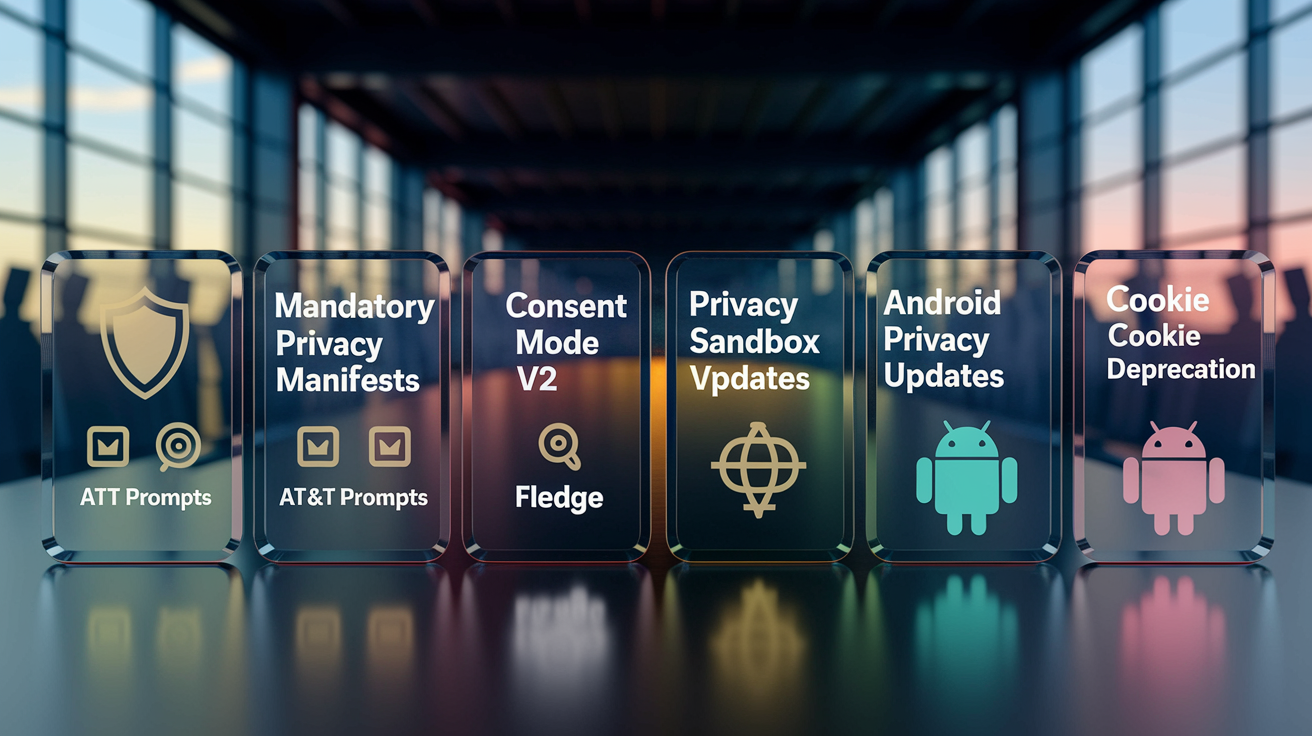
Apple rolled out mandatory privacy manifests for iOS apps and third-party SDKs, enforcement started May 1, 2024. Developers now have to declare four things: what data they collect, how they’ll use it, whether it ties back to individual users, and whether it counts as tracking. When you decline an ATT prompt, iOS automatically blocks network requests to known tracking domains. It’s not just a promise from the developer anymore, the system enforces it.
Apple also expanded the App Privacy Report (first released in iOS 15.2) to show more granular sensor usage, which third-party domains apps are connecting to, and timestamped logs. They added “required reason APIs” so developers can’t quietly use APIs that enable fingerprinting. You have to declare why you need them, and your reason better be legit.
Google started enforcing Consent Mode version 2 for European publishers in March 2024. They added two new parameters (aduserdata and adpersonalization) on top of the original adstorage and analytics_storage controls. Consent Mode v2 comes in Basic and Advanced flavors. Basic stops tags from loading unless the user consents. Advanced loads tags before consent but sends cookieless pings instead.
The Privacy Sandbox on Android launched officially in 2023 through 2024, introducing the Topics API (which replaced the failed FLoC experiment) and FLEDGE for on-device ad auctions. Google also kept delaying the death of third-party cookies in Chrome. Originally planned for 2022, cookie deprecation got pushed into 2024 while they iterated on Privacy Sandbox proposals.
The updates show two different enforcement styles. Apple pushes compliance onto developers and SDKs, with App Store review acting as the gatekeeper. Google puts the responsibility on publishers and advertisers to implement new technical parameters, while keeping backward compatibility during a multi-year transition. Apple’s changes kill advertiser targeting by default unless you opt in. Google’s sandbox keeps aggregated interest-based ads running through browser APIs. Both updated transparency disclosures (Apple through manifests, Google through Play Store Data Safety), but Apple enforces stricter defaults at the OS level.
Data Collection and Storage Practices Explained

Apple does most processing on your device and uses differential privacy to avoid sending identifiable data to their servers. Health data, keyboard learning, Siri requests, photo recognition? Mostly on-device. Only anonymized, aggregated telemetry goes back to Apple when needed. They collect around 12 data points per user: device IDs, Apple ID info, location (if you allow it), app usage analytics, and purchase history from the App Store and Apple Pay. Privacy manifests list categories like Contact Information, Health and Fitness, Financial Information, Location, Search History, User Content, Purchases, and Other Data Types. Apple’s end-to-end encryption for iCloud limits even their own access to your stored data.
Google’s ad business requires way more data. They collect about 39 data points per user, pulling from search queries, location history, Chrome browsing, Gmail metadata, YouTube watch history, Maps navigation, and Play Store activity. That data feeds personalization engines for search results, ad targeting, and product recommendations across the whole ecosystem. Google stores most of this centrally to train machine learning models and sync experiences across devices. They use differential privacy and aggregation in some cases to reduce direct identifier exposure. The Privacy Sandbox tries to replace third-party cookies and cross-site IDs with on-device or browser-mediated APIs. Topics API assigns interest categories locally. FLEDGE runs ad auctions on your device. But Google’s central data stash remains way bigger than Apple’s.
Storage and linkage create different risk profiles. Apple’s setup shrinks the attack surface for breaches and makes it harder to profile you across services, but you lose some cross-device sync and personalization depth. Google’s centralized approach gives you richer personalization and seamless experiences across devices, but it concentrates more identifiable data in one ecosystem. If your account gets compromised or regulators come knocking, there’s more to expose. Both publish transparency reports and let you export your account data, but the volume and detail differ a lot.
Contact and identity data: Apple grabs Apple ID and device identifiers. Google collects Google Account credentials, phone numbers, device IDs, and cross-service login tokens.
Location tracking: Apple requires per-app permission and offers precise or approximate options. Google collects location through Maps, search, and system services, with an account-level toggle.
Behavioral and usage data: Apple logs app usage, Screen Time, and Safari history. Google tracks search queries, YouTube views, Chrome history, and cross-app activity.
Financial and purchase data: Apple stores App Store and Apple Pay transactions. Google logs Play Store purchases, Google Pay activity, and e-commerce behavior via ad integrations.
Health and fitness data: Apple keeps Health app data on-device with optional encrypted iCloud sync. Google collects Fit and Nest data, often stored centrally.
Tracking Controls: ATT vs. Privacy Sandbox
Both companies built frameworks to cut down on tracking, but the mechanics and defaults are wildly different.
Apple’s App Tracking Transparency
App Tracking Transparency (ATT) launched with iOS 14.5 on April 26, 2021. Apps have to show a system prompt asking for permission before they access your advertising identifier (IDFA) or track your activity across apps and websites owned by other companies. When you decline, apps lose access to the IDFA and can’t link your data with third-party data for targeted ads or measurement. The prompt is mandatory for all apps that do tracking (as Apple defines it), and developers have to accurately describe their data use in the prompt text. App Store review rejects apps that try to get around ATT through fingerprinting or sneaky tracking methods.
ATT enforcement is strict and baked into the system. Apple automatically blocks network requests to known tracking domains when you opt out, it’s not just up to the developer to behave. Privacy manifests, enforced from May 1, 2024, make third-party SDKs declare their tracking practices and sign their code. That makes it harder for SDKs to hide tracking from app developers. The framework has crushed opt-in rates across the industry. Most users decline tracking prompts. Advertisers say attribution accuracy and campaign performance dropped, forcing app developers who relied on targeted ads to rethink monetization or shift to contextual ads and first-party data. The explicit consent model hands control to users at the exact moment tracking would start.
Google’s Privacy Sandbox
Google announced the Privacy Sandbox in January 2020. The goal was to replace third-party cookies and cross-site tracking IDs with privacy-preserving APIs that still let interest-based ads and measurement work. The sandbox includes the Topics API, which assigns you to interest topics based on recent browsing. Topics are computed locally on your device, and advertisers only get coarse-grained topic labels instead of your raw browsing history. FLEDGE (now called Protected Audience API) runs ad auctions on your device, so remarketing happens without sharing your identity with external servers. Attribution Reporting API gives aggregated conversion measurement without exposing individual user journeys. Google originally tried FLoC (Federated Learning of Cohorts) but ditched it in 2022 after privacy and competition backlash, replacing it with Topics.
Privacy Sandbox rollout has been slow and full of delays. Google pushed back third-party cookie deprecation in Chrome from 2022 to ongoing testing into 2024, saying advertisers and publishers needed more time to get ready. The sandbox has opt-out controls. You can disable Topics or ad measurement APIs in Chrome settings. But the default keeps these features on, which is the opposite of Apple’s opt-in model. On Android, Privacy Sandbox APIs launched in 2023 through 2024, offering similar on-device interest and auction features. Consent Mode version 2, enforced in March 2024 for European publishers, adds granular consent parameters but still lets tags load in Advanced mode before you give explicit consent, relying on cookieless pings instead.
The key difference is consent design and ad preservation. ATT is a binary opt-in gate. No consent means no cross-app tracking identifiers. Period. Privacy Sandbox shifts tracking from raw identifiers to aggregated, browser-mediated signals, so interest-based ads keep running by default unless you actively opt out. Apple’s approach hurts advertiser effectiveness but gives users stronger control and better default privacy. Google’s approach keeps more ad ecosystem functionality alive through technical controls meant to limit direct identifier exposure, but targeting still happens at an aggregated level and you have to take action to disable it. Both frameworks force developers and advertisers to adapt, but Apple’s model hits harder on business models built around granular user tracking.
Third‑Party Data Sharing Differences

Apple blocks third-party data sharing through technical and policy enforcement. ATT stops apps from sharing your data with third parties for tracking unless you explicitly opt in. Privacy manifests force developers to disclose whether data collected by the app or embedded SDKs goes to third parties, and App Store review checks that disclosures are accurate. When you decline ATT prompts, network requests to known tracking domains get automatically blocked. Even if developers try to transmit identifiable user data, the system stops it. Apple maintains a list of third-party SDKs that must include privacy manifests and application signatures, creating transparency and accountability. Their guidelines ban fingerprinting and covert tracking, and apps caught violating the rules get rejected or pulled from the App Store.
Google’s ecosystem historically made it easy for third parties to share data through ad and analytics SDKs, cross-site cookies, and shared identifiers. Privacy Sandbox and Consent Mode version 2 aim to cut down on raw identifier sharing by replacing cookies and device IDs with aggregated signals and browser APIs. Topics API only shares coarse interest categories with advertisers, not browsing histories or user IDs. FLEDGE runs ad auctions on your device, limiting server-side data leaks. But Google’s ad network and measurement tools still get conversion and interaction data, and Play Store Data Safety disclosures make developers declare third-party sharing without enforcing technical blocking at the OS level. Consent Mode v2 has a Basic config that stops tag loading without consent, but Advanced mode loads tags before consent and sends cookieless pings, keeping some third-party analytics running even without your explicit permission.
Risk and benefit tradeoffs are different. Apple’s model cuts down on third-party data leaks and reduces advertiser attribution across apps, protecting your privacy at the cost of ad-supported app revenue. Google’s sandbox model reduces direct identifier sharing but still lets aggregated data flow to advertisers, keeping more monetization pathways open for publishers while trying to limit cross-site tracking. Apple’s stricter enforcement creates more compliance friction for developers and SDKs. Google’s phased transition and backward compatibility soften the immediate business hit but leave more room for residual data sharing. If you want minimal third-party exposure, Apple’s setup gives stronger default protections. If you’re okay with aggregated ad models in exchange for free services, Google’s sandbox splits the difference between privacy and ad utility.
User Privacy Controls and Customization
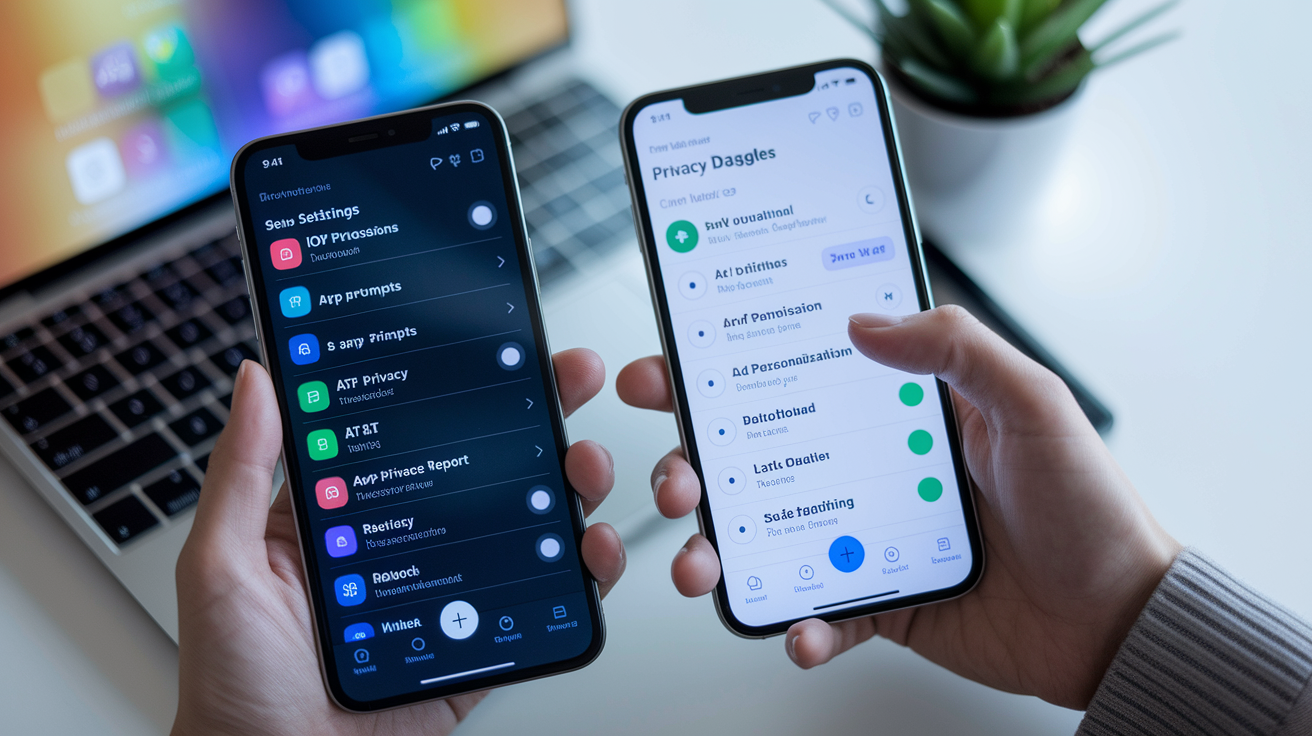
iOS puts centralized privacy settings in Settings > Privacy & Security, where you can review and control location access, camera, microphone, contacts, photos, and tracking permissions for each app. The App Privacy Report, introduced in iOS 15.2, shows which apps accessed sensitive sensors, contacted third-party domains, and when it all happened. You get transparency into what apps do in the background. You can decline ATT prompts individually for each app, and system-level toggles let you disable all tracking requests or limit ad personalization. Privacy features like iCloud Private Relay (requires iCloud+ subscription) hide your IP address and browsing activity from network providers and websites. Mail Privacy Protection stops email senders from tracking when you open messages. Location settings offer granular controls, including approximate location sharing and one-time permissions.
Android offers per-permission controls through Settings > Privacy. You can grant or revoke location, camera, microphone, and storage access for individual apps. Google Account privacy controls give you centralized management of ad personalization, web & app activity, location history, and YouTube history. You can pause or delete collected data. Privacy Dashboard, introduced in Android 12, shows which apps accessed sensitive permissions in the past 24 hours. Privacy Sandbox controls let you disable Topics API, ad measurement, and app-suggested ads. Consent Mode version 2 enforcement in Europe gives you more granular consent options through Basic or Advanced configs, though Advanced mode lets some tag loading happen before you explicitly consent. Android’s permission model includes one-time permissions and automatic permission reset for apps you don’t use, similar to iOS.
Both platforms improved transparency and user control, but the implementation differences affect usability and default privacy. Apple’s ATT prompts show up the moment an app tries to track you, creating a clear decision point with context. Google’s controls are scattered across account settings, Chrome settings, and per-app permissions. You have to navigate multiple interfaces to lock down privacy completely. Apple’s default is deny for tracking (no access without opt-in). Google’s default enables Privacy Sandbox APIs (active unless you opt out). iOS users get automatic blocking of tracking domains when they decline prompts. Android users have to manually disable privacy-invasive features through settings or rely on app-level controls.
Per-app tracking control: iOS enforces ATT prompts with system-level blocking. Android relies on app compliance and Play Store Data Safety disclosures without OS enforcement.
Sensor access transparency: App Privacy Report (iOS) logs all sensor access with timestamps. Privacy Dashboard (Android) shows 24-hour access history.
Ad personalization toggles: iOS offers system-level ad personalization limit. Google Account settings control ad personalization across services.
Location granularity: Both platforms offer approximate location, one-time permissions, and background location warnings.
Data deletion tools: iOS lets you reset data per app. Google Account provides activity deletion and auto-delete schedules for search, location, and YouTube history.
Network privacy: iCloud Private Relay (iOS, subscription) hides IP and browsing. Android offers limited VPN-like features through some carrier and Google One plans.
Strengths and Weaknesses of Each Approach
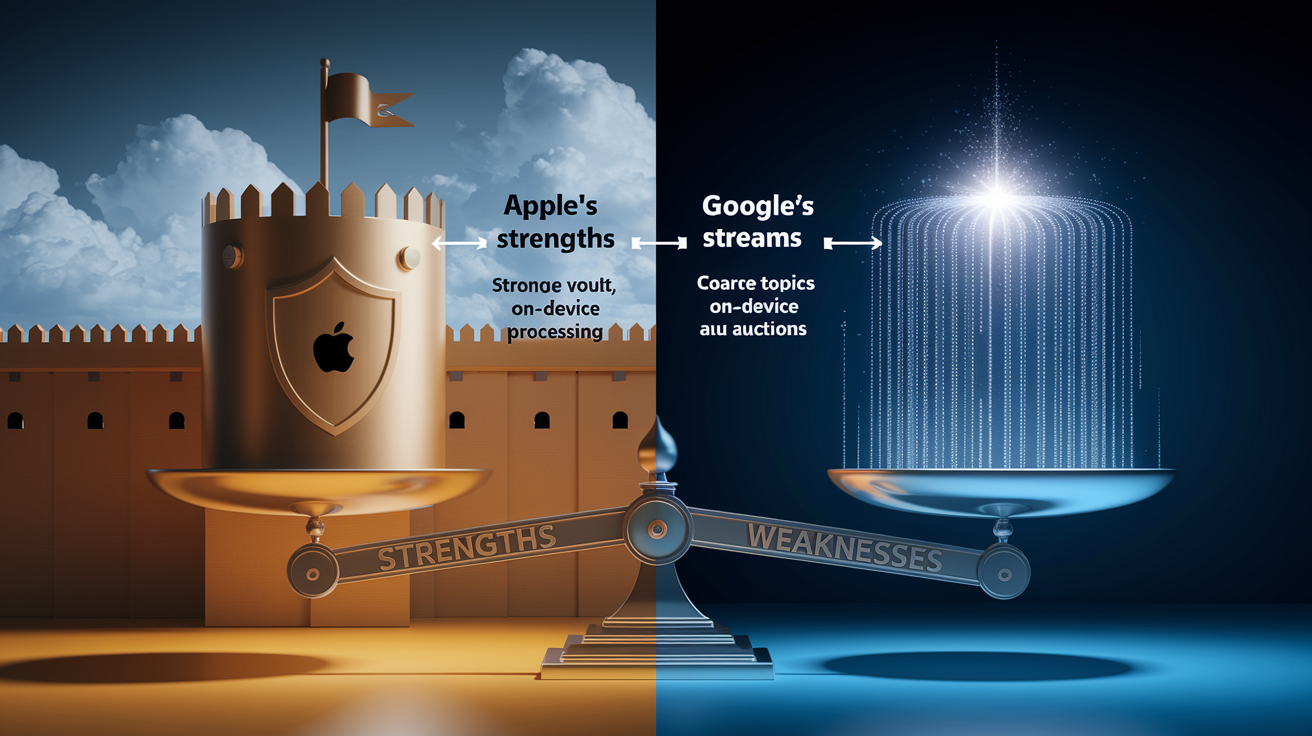
Apple’s privacy model gives you strong default protections through system enforcement and explicit user consent. App Tracking Transparency cuts down on cross-app profiling by blocking identifier access unless you opt in. Privacy manifests create transparency and accountability for third-party SDKs. On-device processing keeps data off central servers, reducing exposure from breaches or regulatory requests. App Privacy Report and granular permission controls give you visibility and control over app behavior. The setup aligns privacy with Apple’s hardware business model, letting them differentiate on privacy without hurting core revenue.
But the strict opt-in model tanks advertising effectiveness. Opt-in rates are low, forcing developers who depend on targeted ads to redesign their monetization strategies. App review enforcement creates friction and delays for developers, and cross-platform apps have to build dual compliance logic for iOS and Android. Privacy features like iCloud Private Relay require subscription fees, which locks out budget-conscious users.
Google’s Privacy Sandbox and Consent Mode keep more ad functionality alive while trying to reduce raw identifier sharing. Topics API and FLEDGE let interest-based ads and remarketing run through aggregated, browser-mediated signals instead of cross-site cookies. That’s a technical middle ground between privacy and keeping the ad ecosystem viable. Phased rollout and backward compatibility reduce immediate business disruption for publishers and advertisers. Play Store Data Safety disclosures and Android permission controls improved transparency, and Google Account privacy settings give you centralized data management. The sandbox model supports Google’s ad revenue while addressing regulatory and competitive pressure around privacy.
Weaknesses? Broader baseline data collection (around 39 data points per user) and a default-enable posture for Privacy Sandbox APIs that requires you to take action to disable. OS-level enforcement of third-party sharing restrictions is weaker than Apple’s, relying more on developer compliance and disclosure accuracy. Migrating to new APIs adds complexity for advertisers and developers, and ongoing cookie deprecation delays create uncertainty for the ad tech ecosystem.
Apple wins on default privacy: strict opt-in, system-level blocking, and on-device processing minimize tracking by default.
Google wins on ad ecosystem continuity: Privacy Sandbox keeps interest-based advertising running through aggregated APIs, reducing disruption for publishers.
Apple imposes higher developer friction: mandatory manifests, required reason APIs, and strict App Store review increase compliance burden.
Google offers more flexibility but weaker enforcement: developer-managed disclosures and opt-out controls leave more room for residual data sharing and tracking.
Final Words
In the action, Apple doubled down on on‑device processing and mandatory tracking prompts, while Google moved toward the Privacy Sandbox and fewer third‑party cookies. The article walked through data collection, tracking controls, third‑party sharing, and user settings to show how each approach actually works.
If you want a quick frame for decisions, think of this as a comparison apple privacy policy vs google privacy policy updates: Apple favors stricter user control; Google favors ecosystem flexibility with privacy tradeoffs. Both updates give users clearer choices and better transparency.
FAQ
Q: Is Apple better for privacy than Google? Is Safari actually more private than Google?
A: Apple is generally stronger on privacy than Google, and Safari is typically more private than Chrome because Apple favors on‑device processing, mandatory tracking prompts, and stricter third‑party limits while Google collects broader behavioral data.
Q: Does Apple have a good privacy policy?
A: Apple’s privacy policy is designed to limit identifiable data and increase transparency; it emphasizes App Privacy Reports and on‑device processing, though critics note some opaque practices and business incentives affect certain disclosures.
Q: Why does Apple say not to use Google?
A: Apple frames advice against using Google as privacy messaging to spotlight its on‑device processing and tracking controls; it’s largely competitive marketing and policy positioning, not a technical ban on using Google services.