


Think your startup can ignore the EU’s new AI rules?
The EU AI Act goes into full effect in August 2026, so startups building or deploying AI in the EU face concrete compliance work.
Where your product sits—banned, high-risk, limited-risk, or minimal-risk—now decides duties like risk classification, data governance, conformity checks, CE marking, registration, logging, and transparency notices.
Miss these steps and you risk heavy fines, national penalties, or losing EU market access; meet them and you can keep selling.
This post explains what founders and engineers must do in 2026 to classify systems, finish conformity, and avoid surprises.
Immediate Impact of the 2026 EU AI Rules on Startups

The EU AI Act dropped on 21 May 2024 and goes into full effect in August 2026. If you’re building or deploying AI systems inside the EU, you’re about to hit a wall of compliance work. The Act sorts systems into four buckets: unacceptable, high-risk, limited-risk, and minimal-risk. Where you land decides what you need to do. Build a recruitment screener, credit tool, medical diagnostic, or something for government decisions? You’re probably high-risk. Run a chatbot, make synthetic content, or use emotion recognition? You’ve got transparency duties even if you’re not high-risk.
Come 2 August 2026, any startup shipping a high-risk system in the EU has to finish conformity checks, stick a CE mark on it, get it into an EU database, and keep logs running plus incident reports ready. Some bans are already live. Article 5 stuff like social scoring and certain manipulative systems got enforced back in February 2025, so you need to confirm your product isn’t on that list or you’re already breaking the law. General transparency rules and obligations for general-purpose models kicked in August 2025. A lot of startups are already halfway into enforcement.
Fines scale with your size and revenue. You can get hit with €35 million or 7% of worldwide annual turnover, whichever’s bigger, for serious stuff like deploying banned systems or ignoring high-risk rules. National laws pile on more. Italy’s Law No. 132/2025, live since 10 October 2025, added prison time of one to five years for unlawful AI-altered content and can disqualify your business under corporate liability frameworks. Beyond fines, you can’t sell in the EU without CE marking and database registration after August 2026.
What startups need to nail in 2026:
- Risk classification: figure out which tier each product feature sits in and write down why
- Conformity and docs: get technical files done, EU declarations signed, and third-party checks completed where needed
- Operational systems: build out risk management, logging, human oversight, and quality processes
- Regulatory registration: get high-risk systems into the EU database and CE marked before you go live
Understanding Risk Categories for Startup AI Systems
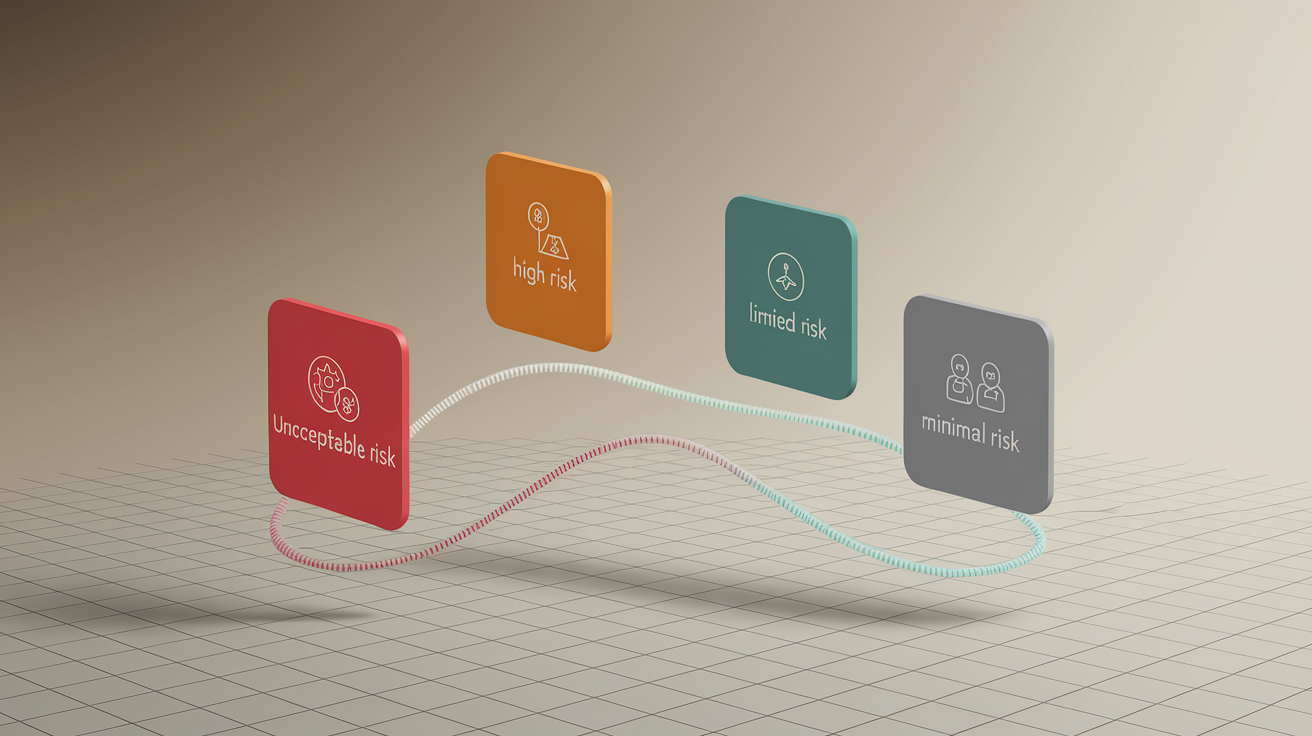
The EU AI Act splits AI into four groups. Each one comes with different headaches. Unacceptable-risk systems are banned. Article 5 lists things like public-authority social scoring, real-time biometric ID in public (with narrow exceptions), and manipulation that preys on vulnerabilities. If you’re building here, you’re done. Redesign or leave the EU market.
High-risk systems are either safety components in regulated products (needing third-party checks under EU product safety rules) or on the Annex III list across eight areas: biometrics, critical infrastructure, education, employment, essential services (credit scoring included), law enforcement, migration/border control, and justice admin. Recruitment tools, loan approvals, medical diagnostics, government benefit systems usually land here. You’re only high-risk if you hit an Annex III category and can’t document an exception proving no significant harm to health, safety, or rights.
Limited-risk covers most chatbots, deepfake generators, emotion tools, and biometric categorisation not tagged high-risk. No full conformity process, but you’ve got transparency duties: tell users they’re talking to AI, flag when content’s been generated or manipulated, and disclose when you’re processing emotion or biometric data. Minimal-risk stuff—spam filters, entertainment recommendations, general analytics—gets no AI Act requirements. GDPR and sector rules still apply though.
| Category | Typical Startup Use Case | Key Duties |
|---|---|---|
| Unacceptable Risk | Social scoring, subliminal manipulation | Prohibited; product must be withdrawn or redesigned |
| High Risk | Recruitment tools, credit scoring, medical diagnostics | Conformity assessment, CE marking, registration, risk management, logging, human oversight |
| Limited Risk | Chatbots, deepfakes, emotion recognition | User disclosure, synthetic-content labelling, transparency notices |
| Minimal Risk | Spam filters, content recommendations | No AI Act requirements; GDPR still applies |
Compliance Duties for Startups Building High-Risk Systems

If you’re putting a high-risk AI system into the EU market, you’ve got a full checklist waiting. Articles 8 through 15 lay out requirements meant to keep things safe, accurate, robust, and under human control. First up: build and document a risk management system. Spot foreseeable risks to health, safety, and fundamental rights. Put mitigations in place. Measure what’s left over. Keep this updated whenever the system changes or you learn something new about how it performs.
Data governance is next. Your training, validation, and testing datasets need to be relevant, representative, and clean. No errors or gaps that seed bias or discrimination. The Act wants specific quality checks, including stats on properties and fit for purpose. You also need technical documentation covering system design, data sources, algorithms, intended use, performance numbers, and how you’re handling risk. Make it detailed enough that a regulator can verify compliance. Store it for ten years after market placement.
Before you can sell or deploy, run a conformity assessment to prove you meet all requirements. Depending on your Annex III category and relevant standards, this could mean internal control or bringing in a third-party notified body. Once you’ve shown conformity, write up an EU declaration, affix CE marking, and register the system in the Commission’s database. Skip any of this and you’re selling illegally, which opens you up to fines and mandatory recalls.
Human oversight isn’t optional. Design the system so real people can understand what it’s doing, watch outputs, step in when needed, and override or shut it down if results are harmful or discriminatory. Oversight has to match the risk and context. A recruitment tool might need a qualified HR person reviewing all candidate rankings before any decision gets made. The Act also wants automatic logging of events and decisions for traceability and accountability. Logs should capture inputs, outputs, timestamps, and who’s using the system.
Core compliance duties for high-risk AI (in order):
- Classify and document: confirm your system’s high-risk and record the reasoning
- Design risk management: spot all reasonably foreseeable risks and build mitigations
- Govern data: validate training/testing data for relevance, representativeness, and freedom from harmful bias
- Prepare technical docs: compile design files, data sources, algorithm descriptions, performance reports, risk assessments
- Conduct conformity assessment: do internal checks or hire a notified body; finish the EU declaration and stick on CE marking before you go live
Transparency and Disclosure Rules for Lower-Risk Startup Tools

Even if your AI doesn’t hit high-risk status, transparency rules under Article 50 can still catch you. These are about making sure users can decide whether and how to engage with AI. The big one: tell users clearly and fast when they’re interacting with an AI system, unless it’s totally obvious. A chatbot in customer support needs a notice right at the start saying responses are AI-generated. Something like “You are chatting with an AI assistant, not a human agent.” Make it immediate, easy to understand, and accessible for users with disabilities.
If you’re generating or manipulating images, audio, video, or text with AI, label it as synthetic or artificially generated. Article 50(2) wants machine-readable, detectable marking where technically feasible. Think digital watermarks, cryptographic fingerprints, embedded metadata, or interoperable labelling standards. The marking should let downstream people (journalists, platform mods, users) spot manipulated content without specialist tools. There are narrow exceptions for minor assistive editing (colour correction, cropping), lawful law-enforcement work, and certain editorial or artistic contexts. But these are tightly defined. Document your legal basis if you’re claiming one.
Emotion-recognition and biometric-categorisation systems that aren’t high-risk still need to tell users their emotional state or biometric traits are being processed. This applies even if you’re not storing personal data or making automated decisions. Running a retail analytics tool that reads customer engagement from facial expressions? Put a clear notice in-store and document GDPR transparency and consent compliance. Miss these transparency duties and you’re looking at admin fines. Some national laws add criminal liability for deceptive practices. Plus, investors and customers treat transparency as a trust signal now. Startups that do clear, user-friendly disclosure can pull ahead.
Startup Support, Sandboxes, and Exemptions in the EU AI Act

The EU AI Act has a few tools meant to ease the load on startups and small companies while keeping innovation moving. Regulatory sandboxes (Article 53) let you test AI systems under regulator supervision before full market deployment. National authorities can grant sandbox access to startups working on novel or high-risk systems. You get time-limited testing with real users and data, lighter documentation and conformity requirements, and direct guidance from regulators. You can iterate on compliance in real time and learn what works before finalising the product. Access isn’t automatic. You usually need to show innovation, commitment to safety, and a clear plan for eventual full compliance.
Enforcement phases in over time, which helps. Prohibited practices and general provisions went live in February 2025, general-purpose AI obligations in August 2025, and main high-risk requirements in August 2026. This stagger gives startups breathing room to classify systems, build documentation, and set up governance before everything lands at once. Some obligations phase in over longer stretches (up to 36 months for certain legacy systems already on the market), so you can focus on new development while planning updates for older stuff.
The Act recognises SMEs don’t have the resources of big corporations. National authorities are supposed to offer proportionate support: access to standards, templates, guidance docs. The European Commission’s committed to publishing codes of practice, harmonised standards, and model conformity procedures to cut legal uncertainty. Startups can join industry groups and working groups shaping these standards, making sure operational realities feed into regulatory guidance. There’s no blanket exemption based on size or revenue. But sandboxes, phased timelines, and proportionate enforcement combine to create a more navigable path than a single hard deadline would.
Practical Compliance Steps for Startups Preparing for 2026

Start compliance prep now, even if you’re not deploying until late 2026. First step: map every AI feature or product to the Act’s risk categories. Write down the classification reasoning. This forces clarity about what the system does, who it affects, and which legal obligations apply. If a system could plausibly be high-risk, treat it that way during design and budget for it.
-
Classify all AI systems: check each product feature against Annex III categories and Article 5 prohibitions; document whether the system is minimal, limited, high-risk, or unacceptable, and record the evidence.
-
Designate roles: identify who’s the provider, deployer, importer, or distributor under the Act; assign internal owners for risk management, data governance, technical docs, and incident reporting.
-
Build or acquire a risk-management framework: set up a documented process for spotting, assessing, mitigating, and monitoring risks to health, safety, and fundamental rights; weave it into product dev and QA workflows.
-
Establish data governance and logging infrastructure: create pipelines to check training data for bias and representativeness; turn on automatic logging of system inputs, outputs, decisions, and user interactions with tamper-proof audit trails.
-
Prepare technical documentation templates: make standardised formats for system descriptions, algorithm explanations, data-source inventories, performance benchmarks, and risk assessments; fill them in as you build features instead of scrambling later.
-
Design human-oversight mechanisms: pinpoint decision points where human review, intervention, or override is required; train personnel on oversight duties and keep training records and qualifications documented.
-
Plan conformity assessment and registration: figure out if you need third-party notified-body assessment; budget time (often one to two months) and cost for external audits; schedule CE marking, EU declaration, and database registration well before August 2026 to dodge last-minute chaos.
Financial Costs, Penalties, and Resource Impact

EU AI Act compliance costs real money and time that startups need to budget into fundraising, hiring, and product roadmaps. Direct costs include third-party conformity assessments, which can run anywhere from thousands to tens of thousands of euros depending on how complex your system is and which notified body you use. Legal and regulatory advisory fees stack on top, especially if you don’t have in-house counsel who knows EU product safety and fundamental rights law. Technical costs come from building logging infrastructure, bias-detection tooling, data-validation pipelines, and secure storage for audit trails and docs. All of that needs engineering time and sometimes new cloud or security services.
Indirect costs come from process overhead and slower ship times. Running risk assessments, prepping technical docs, and finishing conformity procedures can add weeks or months to dev cycles. Startups report that VC due diligence now routinely checks AI Act compliance. Processes that used to take a week now stretch to one or two months as investors dig into governance, data provenance, and regulatory risk. Ignoring this can knock 20 to 30% off your valuation, according to investor surveys. Show solid compliance and it becomes a competitive edge and a trust signal to enterprise customers and procurement bodies.
Penalties for non-compliance are brutal and scale with how bad the violation is. Admin fines can hit €35 million or 7% of annual worldwide turnover, whichever’s higher, for stuff like deploying prohibited systems, failing high-risk obligations, or lying to authorities. Lower-tier violations (inadequate docs, missed transparency disclosures) carry fines up to €15 million or 3% of turnover. National laws can add criminal liability. Italy’s Law No. 132/2025 brought in one to five years imprisonment for unlawful dissemination of AI-generated content and corporate-disqualification measures that can suspend business operations for up to a year. Beyond financial and criminal exposure, non-compliance can trigger product recalls, market-access bans, civil claims for discrimination or rights violations, and reputational damage that tanks customer and investor confidence.
Strategic Business Implications for Startups

Regulatory alignment under the EU AI Act isn’t some back-office checkbox anymore. It’s a core piece of product strategy, fundraising, and competitive positioning. Startups that bake governance, transparency, and human oversight into design from the start can sell these features to enterprise customers and government procurement bodies that increasingly want documented AI safety and accountability. Public-sector contracts in particular often require CE marking, conformity declarations, and proof you’re protecting fundamental rights. Non-compliant startups get locked out of large, stable revenue.
Investor expectations shifted in parallel. In 2025, AI companies grabbed 61% of global VC investment ($258.7 billion out of $427.1 billion), but due diligence now routinely examines regulatory readiness, data licensing, and governance infrastructure. VCs model compliance costs into burn multiples and expect startups to show documented AI governance, data provenance, and bias-mitigation strategies before closing rounds. Startups working across GDPR and EU AI Act jurisdictions face extra scrutiny. Regulatory risk gets factored into valuation. On the flip side, startups that proactively build compliance capabilities, join regulatory sandboxes, and contribute to industry standards can signal maturity and cut perceived risk, potentially scoring better terms and bigger rounds.
Competitive dynamics favour early movers too. Bigger incumbents might absorb compliance costs more easily, but startups that nail compliance-by-design can compete on trust, transparency, and regulatory fitness. Those qualities matter to risk-averse customers in healthcare, finance, and government. Delay creates compounding risk: missing the August 2026 deadline blocks EU market access, forces expensive retrofits, and raises red flags in M&A due diligence. Almost two-thirds of unicorn IPOs in recent cycles priced below their last private valuations. Regulatory overhang is one factor investors cite when marking down late-stage companies with unresolved legal exposure.
Market opportunities unlocked by early compliance:
- Eligibility for public-sector procurement contracts requiring CE marking and conformity docs
- Differentiation in enterprise sales by offering transparent, accountable, human-overseen AI systems
- Faster fundraising cycles and higher valuations from reduced regulatory risk and investor confidence in governance
Final Words
Startups need to act now: classify your models by risk, tighten data and documentation for high-risk systems, and build simple monitoring for lower-risk tools. The Act’s phased enforcement and sandboxes give room to test, but fines and procurement rules mean compliance affects hiring, product roadmaps, and funding.
Follow the practical checklist, lean on EU sandboxes, and budget for audits. This piece showed clear steps on how the 2026 eu ai rules affect startups — compliance can be a competitive advantage if you start early.
FAQ
Q: How will the 2026 EU AI rules immediately affect startups?
A: The 2026 EU AI rules will require startups to sort products by risk level, enforce high-risk obligations for some systems, start phased compliance, and expose firms to fines up to 7% of global turnover.
Q: Which AI systems count as high-risk under the EU AI Act?
A: High-risk AI systems are those used for biometric ID, critical infrastructure, employment decisions, and similar safety-sensitive uses; startups offering these functions will face strict compliance duties.
Q: What obligations must startups building high-risk AI follow?
A: Startups building high-risk AI must implement risk management, data governance, technical documentation, human oversight, cybersecurity, accuracy logs, and register systems in the EU database.
Q: What transparency rules apply to lower-risk tools like chatbots?
A: Lower-risk tools must clearly notify users they’re interacting with AI, label manipulated or synthetic content, and meet transparency duties regardless of company size.
Q: What startup support, sandboxes, or exemptions does the Act provide?
A: The Act provides regulatory sandboxes, phased enforcement, and SME support, often allowing lighter documentation or testing flexibilities to help startups iterate safely in the EU market.
Q: What practical steps should startups take now to prepare for 2026?
A: Startups should map products to risk levels, document systems, implement monitoring and incident response, plan audits, assign responsibility, and budget for compliance and possible external reviews.
Q: What financial costs and penalties should startups expect?
A: Startups should expect enforcement costs like audits, new hires, and tooling, plus penalties for breaches—up to 7% of global turnover or €35 million for severe violations.
Q: How should startups change strategy because of the EU AI Act?
A: Startups should treat compliance as product and go-to-market strategy: design for auditability, highlight regulatory alignment to investors, and use compliance as a trust differentiator in procurement.
Q: Does the EU AI Act apply to startups based outside the EU?
A: The EU AI Act applies when systems affect people in the EU or are deployed there, so non‑EU startups targeting EU users must comply with relevant obligations and registrations.
Q: How can a startup determine if its product is classified as high-risk?
A: A startup can determine high-risk status by matching intended use to the Act’s lists (biometric ID, employment tools, critical infrastructure), performing a risk mapping, and seeking legal review if unclear.