


OpenAI just rewired enterprise ChatGPT API pricing — and it forces teams to rethink model choice and architecture.
GPT-4 Turbo and GPT-3.5 Turbo moved to legacy while GPT-4.1 and GPT-5 replace them with lower, split input/output token rates and new Batch and cached-input discounts.
That means immediate per-token savings for many workloads, but costs still hinge on context size, output length, and whether you use batch or cached tokens.
This post breaks down what changed, who wins or loses, and how to engineer big savings without breaking features.
Summary of OpenAI’s Enterprise ChatGPT API Pricing Changes

OpenAI reshuffled its enterprise API pricing through 2024 and into early 2025, dropping legacy models in favor of new tiers and splitting token rates across input and output streams. The biggest moves? GPT-4 Turbo is out at its old $10 input / $30 output per million tokens. GPT-4.1 stepped in at $2 input / $8 output per million tokens as the go-to production model. And GPT-5 launched at $1.25 input / $10 output per million tokens.
If you’re still on GPT-3.5 Turbo, it’s now labeled legacy at $0.50 input / $1.50 output. OpenAI wants you on GPT-4.1 Nano ($0.10 / $0.40 per million) or GPT-5 Mini ($0.25 input per million, output varies) for better cost and capability.
The rollout happened in stages. GPT-4.1 went live for production in late 2024. GPT-5 arrived mid-2025. Full deprecation notices for GPT-4 Turbo and GPT-3.5 Turbo came early 2025. Alongside the per-token shifts, OpenAI added a Batch API with roughly 50 percent discounts for async, non-real-time requests. GPT-5 Batch pricing drops to $0.625 input / $5 output per million tokens. Cached input tokens, which let you reuse repeated prompt prefixes at way lower cost, now bill at about 90 percent off standard input rates. GPT-5 cached input runs $0.125 per million tokens versus $1.25 standard. These changes split real-time conversational pricing from bulk or repeated-context work, so enterprise teams can engineer serious savings through architecture.
Volume discounts? Still custom. You negotiate directly with OpenAI’s enterprise sales team instead of seeing them on rate cards. Organizations committing to hundreds of millions or billions of monthly tokens can get dedicated throughput instances, reserved quotas, and better per-token rates. Specific thresholds and discount percentages aren’t public. The pricing docs updated as of February and March 2026 now consolidate all current and legacy model rates in one reference, showing which models are actively supported and which have end-of-life timelines.
What enterprises need to watch:
GPT-4 Turbo moved to legacy at $10 / $30 per million. Migrate to GPT-4.1 ($2 / $8) or GPT-5 for lower costs and better performance.
GPT-3.5 Turbo tagged legacy at $0.50 / $1.50 per million. OpenAI points you toward GPT-4.1 Nano or GPT-5 Mini as replacements.
GPT-4.1 came in as the new production long-context model, supporting up to 1 million tokens per request at $2 input / $8 output per million.
GPT-5 launched as the flagship model family with standard, Mini, and Nano tiers. Standard tier priced at $1.25 / $10 per million.
Batch API delivers roughly 50 percent savings on token costs for workloads that can wait up to 24 hours.
Cached input tokens cut input costs by roughly 90 percent when prompt prefixes get reused across requests, making repeated-context applications way more economical.
Detailed Comparison of Old vs New Enterprise Pricing
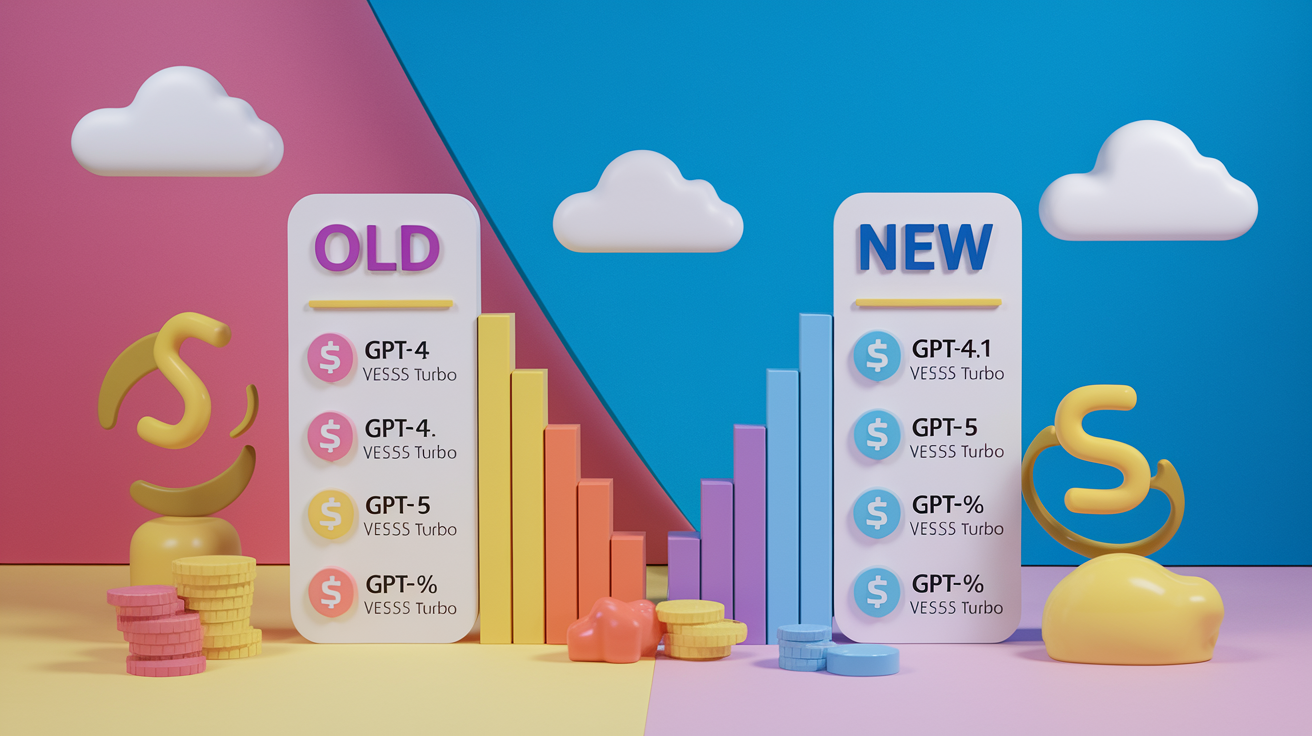
The jump from legacy to current-generation models redefined enterprise cost structures, especially for teams running high-volume or long-context workloads. GPT-4 Turbo, the main production model through most of 2024, carried input costs of $10 per million tokens and output costs of $30 per million. That’s substantially higher than the replacement GPT-4.1, which bills at $2 input and $8 output per million.
Take a typical enterprise chatbot generating 10,000 conversations per month with an average of 1,500 input tokens and 500 output tokens per conversation. Old GPT-4 Turbo pricing would’ve totaled around $300 per month. Under GPT-4.1, the same workload costs roughly $70 per month. That’s a reduction of more than 75 percent.
GPT-3.5 Turbo, once the budget option at $2 per 1,000 tokens (equivalent to $2,000 per million in the old pricing format), got replaced by a legacy rate of $0.50 input / $1.50 output per million. It’s now superseded by GPT-4.1 Nano at $0.10 / $0.40 per million, another order-of-magnitude improvement in cost per capability.
GPT-5 pricing introduced a middle tier between legacy GPT-4 costs and the ultra-low Nano rates. The flagship GPT-5 model sits at $1.25 input / $10 output per million tokens. That’s a modest premium over GPT-4.1 for input tokens but a slight bump in output costs, reflecting the model’s enhanced reasoning and generation quality. GPT-5 Mini, positioned for standard production chat and content tasks, offers input at $0.25 per million tokens. It undercuts both GPT-4.1 and GPT-5 while keeping performance improvements over GPT-3.5.
The new reasoning-focused o3 model launched at $2 input / $8 output per million, identical to GPT-4.1. The lighter o4-mini variant costs $1.10 input / $4.40 output per million, providing a reasoning-capable option at roughly half the output cost of GPT-5.
| Model | Old Price (per 1M tokens) | New Price (per 1M tokens) | Percentage Change |
|---|---|---|---|
| GPT-4 Turbo (legacy) | Input $10 / Output $30 | Input $2 / Output $8 (GPT-4.1 replacement) | −80% input / −73% output |
| GPT-3.5 Turbo (legacy) | ~$2,000 per 1M (old format) | Input $0.50 / Output $1.50 (legacy) or $0.10 / $0.40 (GPT-4.1 Nano) | −99.975% input / −99.98% output (Nano vs old) |
| GPT-5 (flagship) | Not previously available | Input $1.25 / Output $10 | New model tier |
| GPT-5 Mini | Not previously available | Input $0.25 / Output (varies) | New model tier |
| GPT-4.1 Nano | Not previously available | Input $0.10 / Output $0.40 | New model tier |
Cost-Per-Token Breakdown for Enterprise Models

OpenAI charges separately for input tokens (the prompt and conversation history sent to the model) and output tokens (the model’s generated response). Output tokens consistently cost four to eight times more than input tokens across all current model families. That reflects the computational expense of generation versus encoding.
GPT-5 bills input at $1.25 per million tokens and output at $10 per million tokens, an 8× multiplier. GPT-4.1 follows a similar pattern at $2 input and $8 output (4× multiplier), while GPT-4.1 Nano maintains the ratio at $0.10 input and $0.40 output. This input/output asymmetry means enterprises running chatbots or agents with long conversation histories face compounding costs if they send the full context window on every turn. The accumulated prompttokens grow with each exchange while completiontokens remain relatively stable per response.
Enterprise-exclusive token categories introduced alongside the new pricing include cached input tokens and Batch API tokens. Cached input tokens apply when a prompt prefix is repeated across multiple requests. OpenAI automatically detects and caches these prefixes, billing them at about 10 percent of the standard input rate. GPT-5 cached input costs $0.125 per million versus $1.25 standard, a 90 percent discount.
Batch API tokens, used for asynchronous workloads that return results within 24 hours, are billed at roughly 50 percent of synchronous rates. GPT-5 Batch input costs $0.625 per million and output $5 per million. These categories let enterprises architect applications that separate real-time user-facing interactions (full-price synchronous tokens) from background processing, training data generation, or repeated-context retrieval tasks (discounted cached or Batch tokens). The effective per-token cost for a given workload can vary by an order of magnitude depending on how the application is designed.
How token billing works in practice:
Every API call counts both input and output tokens against your account. The sum appears in the response metadata as total_tokens.
Input tokens include the system prompt, user message, and any conversation history sent in the request. Trimming history or using sliding windows reduces input costs.
Output tokens are billed at the higher rate and scale with the length of the model’s reply. Setting max_tokens caps output length and prevents runaway costs.
Cached input tokens are automatically detected and discounted when identical prompt prefixes are reused. No code changes required, but consistent prompt structure is necessary to trigger caching.
Financial Impact on Enterprise Teams and Workloads

The pricing changes deliver substantial cost reductions for teams migrating from legacy models to current-generation alternatives. But the magnitude of savings depends heavily on workload composition and architectural choices.
A customer-support chatbot handling 10,000 conversations per month, each with about 1,500 input tokens and 500 output tokens, would’ve cost roughly $300 per month on GPT-4 Turbo at $10/$30 per million tokens. Under GPT-4.1 at $2/$8 per million, the same workload drops to around $70 per month, a 77 percent reduction. Switching to GPT-5 Mini at $0.25 input per million (with output rates typically lower than GPT-5 flagship) could push monthly costs below $20 for the same volume, depending on exact output pricing and conversation structure. For enterprises running millions of tokens per day, these percentage improvements translate to five or six-figure annual savings. Model selection and prompt engineering become critical budget levers.
High-context workloads, like legal document analysis or long-form code review, see mixed impacts. GPT-4.1’s 1-million-token context window eliminates the need for chunking or multi-request orchestration, reducing engineering overhead and API call counts. But the per-request cost scales linearly with the context size.
Processing a single 500,000-token document with a 2,000-token summary output on GPT-4.1 costs $1 for input (500,000 tokens × $2 / 1,000,000) plus $0.016 for output (2,000 tokens × $8 / 1,000,000), totaling roughly $1.02 per document. At 1,000 documents per month, this workload costs about $1,020. Manageable for high-value use cases but material enough that enterprises should confirm ROI before scaling. Batch API usage for non-urgent document processing cuts this cost in half, bringing the same workload to roughly $510 per month.
Conversational applications face compounding token growth unless explicitly managed. A 20-turn customer conversation that sends the full history on every API call will accumulate prompt tokens quadratically. Turn 1 sends 100 tokens, turn 2 sends 200, turn 3 sends 300, and so on, reaching 2,000 prompt tokens by turn 20 even if each user message is only 100 tokens. The cumulative input token count for such a conversation is about 21,000 tokens, while a windowed approach that retains only the last 5 turns would cap input at roughly 5,500 tokens, a 75 percent reduction.
For an enterprise running 50,000 such conversations per month, this windowing strategy saves about $13 per month on GPT-5 Mini input costs alone ($0.25 per million tokens), or roughly $150 annually. At larger scales, enterprise chatbots serving millions of users, conversation history management becomes a primary cost driver. It often outweighs the per-token sticker price.
Why OpenAI Updated Enterprise Pricing
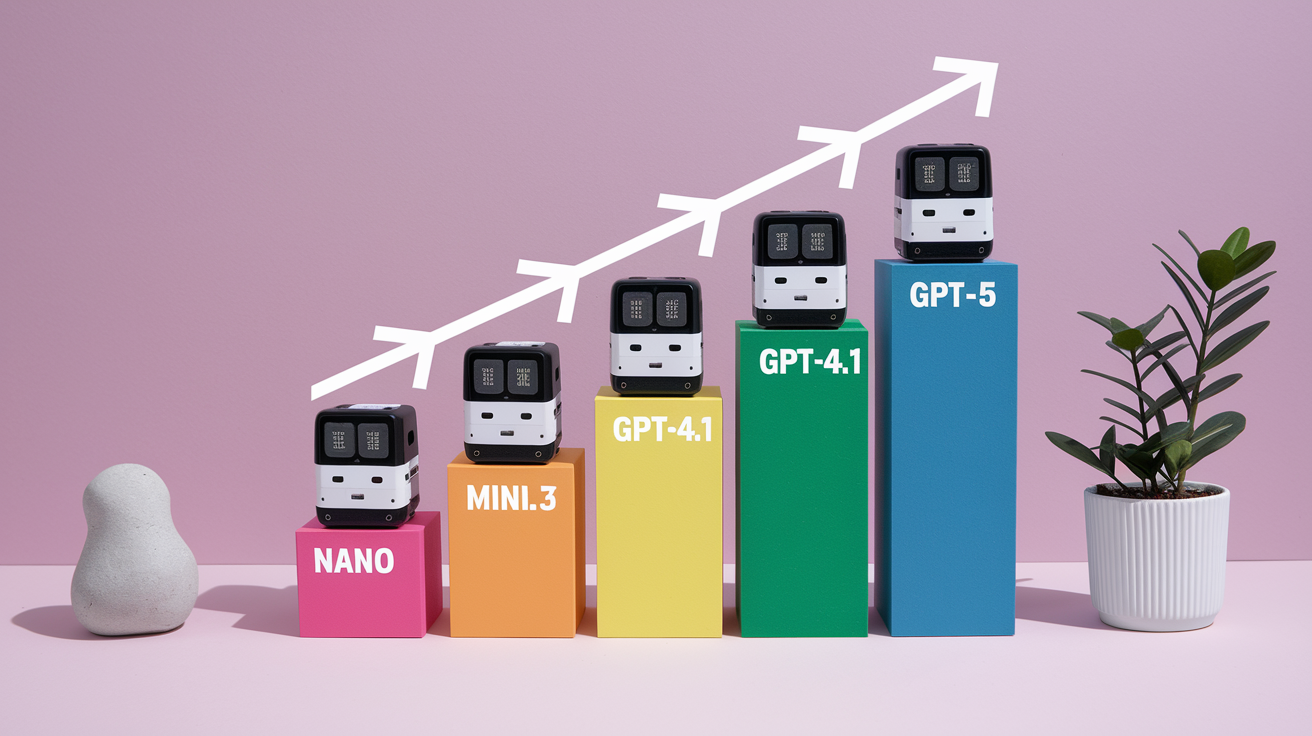
OpenAI’s pricing revisions reflect infrastructure cost efficiencies achieved through model optimization, training pipeline improvements, and economies of scale as enterprise adoption expanded throughout 2024 and 2025. GPT-4 Turbo, originally priced at $10 input / $30 output per million tokens, was based on a large, computationally expensive architecture trained in 2023. GPT-4.1 delivers comparable or superior performance at $2 / $8 per million because later training runs incorporated distillation techniques, quantization improvements, and architectural refinements that reduced inference cost per token by more than 75 percent.
The introduction of Nano and Mini variants, GPT-4.1 Nano at $0.10 / $0.40 and GPT-5 Mini at $0.25 input per million, allowed OpenAI to offer graduated pricing tiers that match workload complexity. This steers routine classification, intent detection, and simple content tasks to lower-cost models while reserving flagship GPT-5 and reasoning-focused o3 models for high-value reasoning and generation.
Market positioning also played a role. Anthropic’s Claude and Google’s Gemini families offer comparable enterprise models in the $1 to $15 per million token range. OpenAI’s legacy GPT-4 Turbo rates placed it at the high end of that spectrum. Lowering GPT-4.1 and introducing competitively priced GPT-5 and Mini tiers helps OpenAI retain enterprise customers evaluating multi-vendor strategies. It gives procurement teams clearer cost/performance trade-offs when comparing OpenAI to alternatives.
The Batch API discount structure (about 50 percent off) and cached input pricing (about 90 percent off) further differentiate OpenAI’s pricing by rewarding architectural sophistication. Enterprises that invest in prompt caching, asynchronous processing, and model routing can achieve effective per-token costs well below published synchronous rates, creating a pricing moat that rewards technical optimization.
How Enterprises Can Optimize Costs Under the New Structure
Enterprises can reduce API spending by 60 to 80 percent through systematic model routing, caching, and workload segmentation, according to optimization case studies compiled in the March 2026 pricing documentation. The most impactful lever is model selection. Routing trivial tasks like intent classification, yes/no decisions, and structured data extraction to GPT-4.1 Nano ($0.10 / $0.40 per million) instead of GPT-5 ($1.25 / $10 per million) cuts input costs by 92 percent and output costs by 96 percent for those calls.
A customer-support system that classifies 100,000 inbound messages per month (averaging 200 tokens each) costs about $2 per month on Nano versus $25 per month on GPT-5. That saves $23 per month, or $276 annually, on a single workflow component.
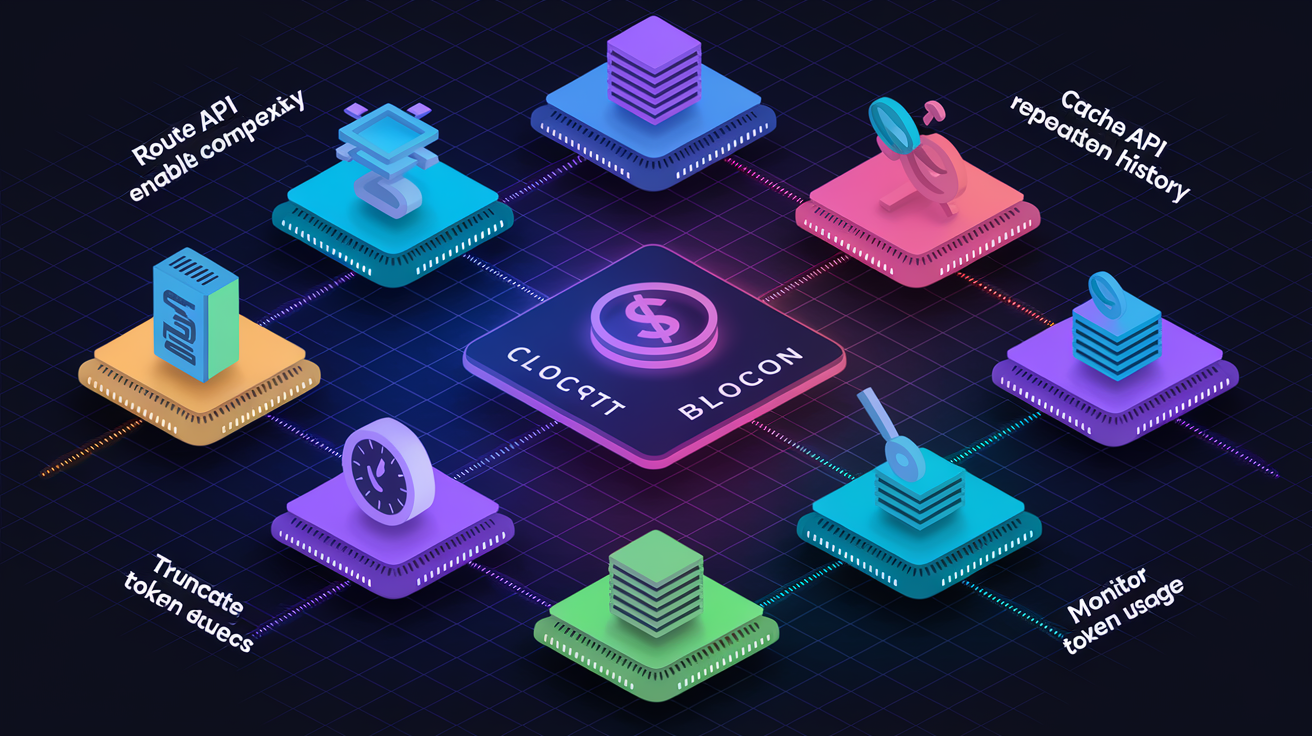
Six cost-saving strategies to implement immediately:
Route by complexity. Use Nano for binary decisions and routing, Mini for standard chat, and flagship models only for complex reasoning or long-form generation.
Enable Batch API for non-urgent workloads. Data labeling, report generation, and training-data synthesis can tolerate 24-hour turnaround and qualify for roughly 50% discounts.
Cache repeated prompts. Standardize system prompts and context prefixes across requests to trigger automatic cached-input pricing (roughly 90% off input tokens).
Truncate conversation history. Implement sliding windows (retain last 5 to 10 turns) or periodic summarization to prevent quadratic token growth in multi-turn chats.
Set max_tokens limits. Cap output length to prevent runaway generation costs, especially for open-ended prompts or user-generated input.
Monitor token usage in real time. Use dashboard analytics and response headers (usage.total_tokens) to identify high-cost endpoints and optimize prompt templates.
Combining these tactics delivers compounding benefits. A case study from a 60-million-user education platform reported that migrating 70 percent of classification tasks to Nano, enabling Batch API for nightly report generation, and caching course-content prompts reduced monthly API spend by about 68 percent. From an estimated $120,000 per month on GPT-4 Turbo to roughly $38,000 per month on the optimized GPT-4.1 and GPT-5 Mini architecture.
Enterprises should model their expected token volumes by task type, map each task to the cheapest sufficient model tier, and project savings before committing to migration timelines. Procurement teams negotiating enterprise agreements should explicitly request volume discounts tied to total monthly token consumption, dedicated throughput quotas for predictable workloads, and access to Batch API and caching features as standard contract terms rather than opt-in add-ons.
Final Words
You saw the core updates in action: new enterprise rates, per‑token price shifts across GPT‑4, GPT‑4 Turbo, GPT‑4.1 and GPT‑3.5, changes to model tiers, volume discounts, and rollout dates for 2024–2025.
Those shifts affect planning. We laid out side‑by‑side comparisons, cost‑per‑token math, and practical tactics — prompt compression, batching, caching — so teams can keep budgets predictable at scale.
With the numbers and playbook here, teams can quantify risk and act fast. OpenAI ChatGPT API enterprise pricing changes explained should make your next budget cycle clearer and more manageable.
FAQ
Q: What are the main enterprise pricing changes in OpenAI’s update?
A: The main enterprise pricing changes are updated per‑token rates across GPT‑4, GPT‑4 Turbo, GPT‑4.1 and GPT‑3.5, revised volume discounts, model‑tier adjustments, and staggered rollouts during 2024–2025.
Q: Which GPT models saw price increases or decreases?
A: The GPT models that saw changes include increased rates for higher‑capacity GPT‑4 and GPT‑4.1, while GPT‑4 Turbo and GPT‑3.5 experienced smaller increases or reductions, depending on enterprise contract and volume tiers.
Q: When do the new enterprise pricing changes take effect?
A: The new enterprise pricing changes take effect on a staggered schedule across 2024–2025, with specific model and feature dates varying by contract and region; consult OpenAI notices or your enterprise account rep for exact dates.
Q: How do old and new per‑token costs compare for enterprise models?
A: Old and new per‑token costs compare with generally higher rates for premium GPT‑4 families and adjusted lower or stable rates for Turbo and GPT‑3.5; percentage changes vary by model, shown in a detailed comparison table.
Q: How does input versus output token billing change under the new structure?
A: Input versus output token billing under the new structure continues to bill separately, with distinct per‑token input and output rates and potential enterprise‑exclusive token categories for features like context windows or embeddings.
Q: What is the financial impact on enterprise teams and workloads?
A: The financial impact on enterprise teams and workloads raises costs for heavy GPT‑4 usage, shifts model selection incentives toward Turbo or GPT‑3.5 for cost efficiency, and makes volume planning and monitoring essential to control monthly spend.
Q: What practical steps can enterprises take to optimize costs under the new pricing?
A: Enterprises can optimize costs by using prompt compression, batching requests, caching frequent responses, choosing cheaper models when suitable, negotiating volume discounts, and monitoring token usage per workflow for continuous tuning.
Q: Are volume discounts or model tiers added or removed in the update?
A: The update adjusted volume discounts and modified model tiering, including additions or consolidations of tiers; exact changes depend on enterprise agreements and billed volumes, so review contract updates or account communications.
Q: How should I estimate monthly API spending after the pricing change?
A: To estimate monthly API spending after the pricing change, multiply average input and output tokens per request by monthly request count, apply new per‑token rates, and add optional feature charges like vector storage or fine‑tuning.
Q: How does the ChatGPT Enterprise pricing update relate to the API enterprise changes?
A: The ChatGPT Enterprise pricing update relates to API changes but can differ: ChatGPT Enterprise often bundles product licensing, admin features, and custom controls, while API pricing is per‑token and may use different enterprise rates and discounts.