

If the leaked AMD slide is legit, the PlayStation 6 will run thousands of PS4 and PS5 games at launch — ray tracing included — on RDNA5 silicon.
That’s the claim that started this rumor.
It matters because backward compatibility reshapes buying choices, developer work, and Sony’s hardware tradeoffs.
This piece breaks down exactly what the slide says, what it omits, how credible the numbers look, and what players and studios should expect from a PS6 using a “Canis” RDNA5 GPU and a handheld that shares the same library.
Bottom line: promising, but many key specs are missing.
Immediate Breakdown of PlayStation 6 Rumored Specs and Backward Compatibility

The PlayStation 6 rumored specs and backward compatibility story hangs on a single leaked AMD presentation slide. It explicitly lists “BackCompatibility (PS4/PS5) within RDNA5” as an active engineering workstream. The slide shows Sony’s next platform built on AMD’s RDNA5 GPU tech and identifies a “Canis GPU config” with ray tracing backward compatibility noted as “RT (w/ BC to PS5).” The leak points to both a standard console and a handheld running thousands of legacy titles from the PlayStation 4 and PlayStation 5 catalogs from day one, with the handheld positioned as a portable version of the same ecosystem, not a separate platform. But the slide gives you nothing on CPU clock speeds, RAM capacity, storage type or capacity, or any concrete release timeline.
Manufacturing cost figures drive some of the economic speculation. The PS6 handheld APU is pegged at $46.8 per unit to produce, versus $81.5 for the die-shrunk PS5 APU. That’s a meaningful gap that led some commentators to float the idea of a compact “PS6 S” variant selling around $399. The Canis GPU should outperform the PS5 even at that lower production cost, which opens the door for multiple SKUs at different price points. Platform features listed on the slide include AI upscaling/super-resolution, low-power media playback (key for handheld battery life), and a dedicated low-power SKU built to meet EU energy regulations.
Core facts from the leak:
Backward compatibility covers PS4 and PS5 libraries, with ray tracing support for PS5 RT titles explicitly noted. Architecture is RDNA5-based with a named “Canis” GPU configuration, but no Compute Unit counts, CPU model, or frequency specs provided. Critical missing pieces include RAM type/capacity, NVMe storage details, IO throughput numbers, and thermal/TDP targets. Manufacturing cost implications show the handheld APU at $46.8 versus $81.5 for PS5 silicon, pointing to aggressive pricing potential for lower-tier SKUs. Credibility sits at medium. The leak comes from an alleged internal AMD vendor slide with specific technical workstreams and BOM numbers, but it’s unconfirmed by Sony or AMD and may be outdated or incomplete.
Deep Dive Into PlayStation 6 CPU, GPU, and APU Architecture Rumors
The PlayStation 6 CPU GPU performance foundation sits on AMD’s RDNA5 architecture, per the leaked internal slide. The platform includes area optimizations called out specifically for RDNA5 and a GPU config codenamed “Canis GFX,” expected to surpass the PlayStation 5 in raw compute throughput. Separate industry reports suggest the PS6 handheld will use a Zen 6 CPU paired with RDNA5 GPU cores, with docked-mode capability for higher performance when connected to external displays. The architecture is designed to handle AI-driven super-resolution and ray tracing at the hardware level, with the AMD slide explicitly listing these as platform features rather than optional add-ons.
The AMD custom SoC rumors leave major spec gaps. No Compute Unit count for the Canis GPU has been disclosed, no memory bandwidth figures appear in the leak, and no CPU core count or clock speed range is specified. The handheld’s Zen 6 CPU reference suggests an architectural generation leap over the PS5’s Zen 2 cores, but without clock speeds or cache hierarchy details, performance projections stay speculative. The platform’s expected superiority over PS5 is stated in comparative terms on the slide, “outperform PS5,” but lacks numeric benchmarks or percentage improvements to quantify the gap.
Expected architectural improvements (based on known RDNA5 and Zen 6 roadmaps):
- Improved ray tracing acceleration units compared to RDNA2/RDNA3, with dedicated BC support for PS5 ray-traced workloads
- Integrated AI inference engines for real-time upscaling and machine learning-based visual enhancements
- Zen 6 CPU architecture brings higher IPC (instructions per cycle), improved power efficiency, and potentially higher core counts than the PS5’s 8-core Zen 2 design
- RDNA5 area optimizations could enable higher Compute Unit density at lower power draw, supporting both a compact handheld and a high-performance console on the same architecture
PlayStation 6 RAM, Storage, and IO Performance Expectations
The PlayStation 6 RAM and memory bandwidth specs are completely absent from the leaked AMD slide. Separate rumor streams have floated the idea that the console could feature 24GB of unified GDDR memory to support advanced ray tracing and machine learning workloads without inflating pricing, but this figure doesn’t appear in the primary leak document and remains unverified. The PS6 SSD speed and storage architecture also lack concrete details. No NVMe controller specs, no storage capacity tiers, and no IO throughput targets (like GB/s read speeds) were disclosed. The PlayStation 5 introduced a custom IO subsystem with 5.5 GB/s raw bandwidth and hardware decompression, so expectations center on a next-gen IO block that could double or triple that throughput. But the leak provides no engineering evidence to confirm those projections.
The platform’s AI upscaling and ray tracing features listed on the slide imply the need for substantially higher memory bandwidth than PS5 to feed both traditional GPU compute and machine learning inference engines simultaneously. The absence of bandwidth figures and RAM capacity in the leak is a critical gap for developers and technical analysts trying to project real-world performance. PlayStation 6 storage expansion options also remain unknown. Whether the console will use proprietary expansion modules, standard M.2 NVMe drives with certification requirements, or a hybrid approach isn’t addressed in the leaked materials.
Memory and storage expectations (based on architectural needs, not confirmed specs):
Rumored 24GB unified memory capacity, likely GDDR6 or GDDR7 depending on launch timeline, but no official confirmation. Storage details missing entirely. No NVMe generation (Gen 4 vs. Gen 5), no capacity SKUs, no expansion slot specifications disclosed in the leak. Expected IO improvements over PS5’s 5.5 GB/s raw bandwidth, possibly targeting 10+ GB/s to support faster game installs and reduce load times, but no numeric targets provided.
Advanced PlayStation 6 Graphics: Ray Tracing, AI Upscaling, and 4K/8K Targets

The PS6 ray tracing capabilities get explicit attention in the leaked AMD slide, which notes “RT (w/ BC to PS5)” as a platform engineering workstream. This tells you that ray-traced PlayStation 5 titles should run on PlayStation 6 hardware with their RT features intact, suggesting a forward-compatible implementation of RDNA5’s ray tracing acceleration units that can interpret and execute RDNA2-era RT instructions. AI-driven super-resolution upscaling is also listed as a distinct feature, implying dedicated machine learning inference hardware integrated into the GPU pipeline. These two technologies form the foundation of next-gen visual fidelity targets, enabling higher resolution output (4K/8K) and improved frame pacing without proportionally scaling power consumption.
The PlayStation 6 4K and 8K gaming support ambitions stay speculative without specific performance metrics. No ray tracing performance scores, no pixel fill rate benchmarks, and no comparative RT core counts versus RDNA3 or competitor architectures appear in the leak. The expectation that RDNA5 will “significantly surpass” PS5 graphics performance is stated in relative terms but lacks numeric grounding. Industry context suggests that 4K gaming at 60fps with ray tracing enabled is the baseline target for next-gen consoles, with 8K output likely reserved for upscaled content or less graphically intensive titles rather than native rendering at that resolution.
| Feature | What the Leak Claims | What’s Still Unknown |
|---|---|---|
| AI Upscaling | Listed as “AI super resolution” feature on AMD slide; integrated into platform | Specific algorithm (FSR-successor, proprietary ML model), performance overhead, quality tiers, developer SDK access |
| Ray Tracing BC | Explicit “RT (w/ BC to PS5)” notation; PS5 RT titles expected to function | RT core count, performance improvement % over PS5, new RT features (e.g., better BVH traversal), global illumination support |
| 4K/8K Support | Not explicitly stated; inferred from next-gen GPU positioning and AI upscaling presence | Native 4K targets at what frame rates, 8K upscaling quality, HDMI 2.1+ certification, variable refresh rate ranges |
| Frame Rate Ambitions | No numeric targets in leak | Whether 120fps at 4K is standard, whether AI upscaling stabilizes frame pacing, whether performance modes are SKU-dependent |
PS6 Frame Rate, Latency, and Display Output Improvements
The PS6 120fps and frame rate targets aren’t documented in the leaked AMD slide, leaving performance ambitions in the realm of inference based on competitive context. The PlayStation 5 supports 120fps output at 1080p and 1440p on select titles, and next-gen hardware would logically target 120fps at 4K resolution for competitive multiplayer titles and performance-focused modes. AI upscaling could help stabilize frame pacing by allowing the GPU to render at a lower internal resolution (say, 1440p) and upscale to 4K with minimal latency, reducing GPU load and maintaining higher, more consistent frame rates. Without explicit engineering targets in the leak, these remain educated projections rather than confirmed capabilities.
Display output standards, whether the console will support HDMI 2.1, HDMI 2.2, or newer specs, aren’t mentioned. Variable refresh rate (VRR) support, low framerate compensation (LFC), and other latency-reduction technologies are absent from the leak materials, despite being baseline features on current-gen consoles and competitive gaming hardware. The lack of input lag and latency improvement details is notable given that Sony has historically emphasized responsive gameplay in first-party titles and system features.
The handheld device’s display output capabilities are similarly unspecified. Whether the handheld supports HDMI output in docked mode, what resolutions and refresh rates are available in portable versus docked configurations, and whether VRR is supported on the built-in screen are all open questions. The low-power media playback path mentioned in the leak suggests the handheld will include power-saving display modes for video streaming and less-demanding content, but gaming-specific display features aren’t addressed.
PlayStation 6 Hardware Design, Cooling, and Power Efficiency

The PlayStation 6 thermal design and cooling systems aren’t detailed in the leak, but the AMD slide includes a low-power SKU specifically designed to meet EU energy regulations, signaling that power consumption is a design constraint Sony is engineering around. The handheld device features a low-power media playback pipeline, allowing video streaming and lighter workloads to run at reduced power draw to extend battery life. The Canis APU’s lower manufacturing cost ($46.8 versus $81.5 for PS5 silicon) suggests a smaller die size or more efficient manufacturing process, both of which typically correlate with improved thermal efficiency and lower thermal design power (TDP) requirements.
The absence of TDP values, fan design details, or references to advanced cooling solutions (liquid metal thermal compound, vapor chamber heat spreaders, or split-plane cooling for high-performance SKUs) leaves a significant gap in understanding how Sony plans to manage thermals in a system expected to exceed PS5 performance. The handheld’s thermal envelope is particularly constrained. Delivering console-class performance in a portable form factor requires aggressive thermal and power optimization, but no engineering specifics on cooling architecture appear in the leaked materials.
Efficiency themes visible in the leak:
Low-power media pipeline for handheld battery conservation during video playback and non-gaming tasks, reducing active power draw when full GPU/CPU performance isn’t required. EU-required energy SKU indicates a variant optimized for power consumption limits, likely involving clock speed adjustments or reduced feature sets to meet regulatory thresholds. Smaller and cheaper APU production cost hints at a more efficient silicon design, potentially enabled by advanced node manufacturing (5nm, 3nm, or smaller) not specified in the leak.
PS6 Handheld: Architecture, Cost Breakdown, and Performance Relative to PS5
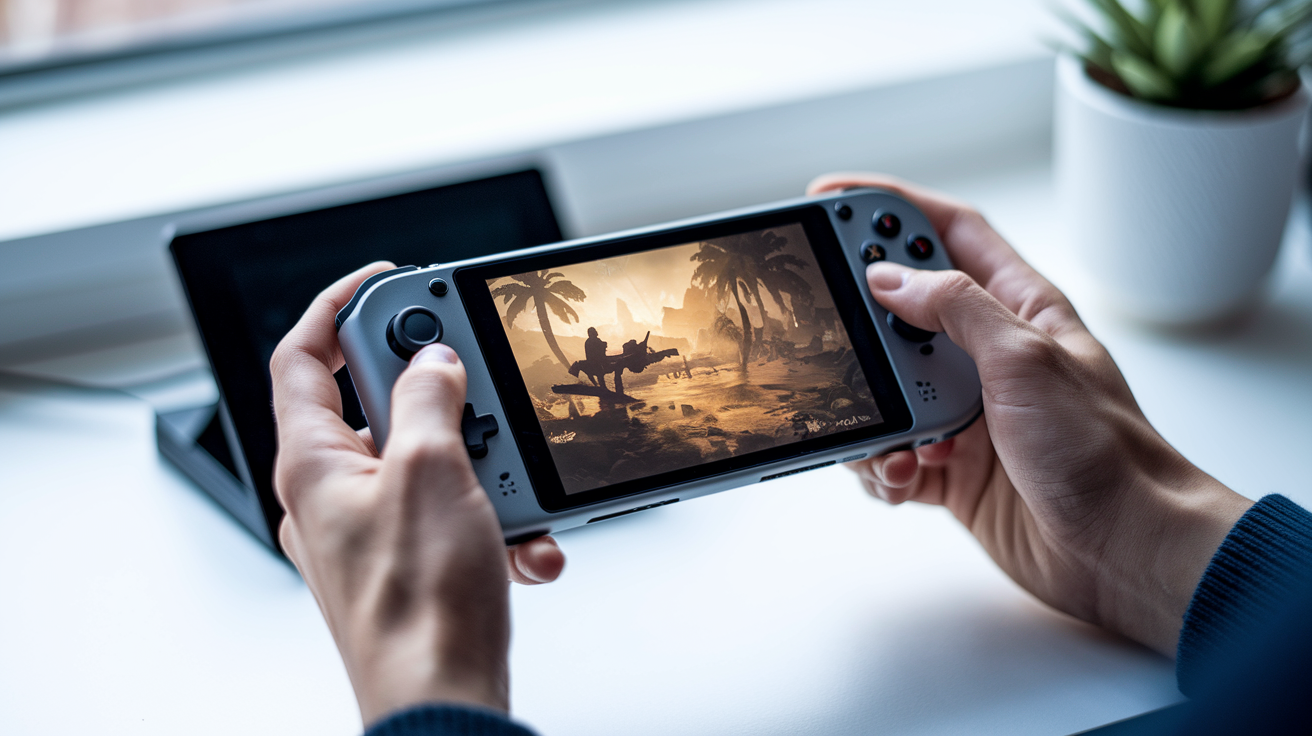
The PlayStation 6 handheld architecture is positioned as a portable version of the full PS6 ecosystem rather than a separate, lower-tier device with its own compatibility constraints. The handheld runs the same RDNA5-based Canis GPU configuration and should support the same backward compatibility scope (PS4, PS5, and PS6 titles) without requiring separate porting or optimization work from developers. The handheld APU cost of $46.8 per unit is a critical economic signal. At roughly 57% of the PS5 die-shrunk APU cost ($81.5), the handheld’s silicon is substantially cheaper to manufacture despite being a newer-gen design. This cost efficiency is attributed to RDNA5 area optimizations, smaller die size, and potentially a lower Compute Unit count or reduced feature set compared to the flagship console SKU.
Earlier leaks suggest the handheld uses a Zen 6 CPU and RDNA5 GPU, with docked mode support that allows the device to output to external displays at higher resolutions and frame rates. The PS6 handheld vs PS5 performance comparison is stated in relative terms. The handheld should outperform the PlayStation 5, but no numeric benchmarks, teraflop ratings, or frame-rate comparisons are provided. If true, this would position the handheld as the most powerful portable gaming device on the market, surpassing mid-tier stationary consoles from the current generation while maintaining full library compatibility with thousands of existing titles.
The low-power media pipeline is a standout feature for portable use, allowing the handheld to switch to a reduced-power mode for video streaming, music playback, and non-gaming applications. This extends battery life and reduces thermal output during passive media consumption, addressing one of the key usability challenges in handheld gaming devices. The handheld’s docked mode capability suggests a variable clock speed or power profile system similar to the Nintendo Switch, where the device runs at higher performance when connected to external power and cooling.
| Component | Rumored Feature | Cost/Performance Note |
|---|---|---|
| APU | Zen 6 CPU + RDNA5 GPU (Canis config) | $46.8 manufacturing cost; 43% cheaper than PS5 silicon; expected to exceed PS5 performance |
| Compatibility | Full PS6, PS5, PS4 library support; same ecosystem as console | No separate porting required; handheld is not a separate platform |
| Docked Mode | External display output with higher performance profile | Likely variable clock speeds; no specific resolution/frame rate targets disclosed |
| Low-Power Media | Dedicated low-power pipeline for video and audio playback | Extends battery life during non-gaming use; reduces thermal load |
Backward Compatibility Structure: PS4/PS5 Support, Emulation, and Ray-Traced Titles

The PS6 backwards compatibility with PS5 games and PlayStation 6 compatibility with PS4 library are explicitly documented on the leaked AMD slide, which lists “BackCompatibility (PS4/PS5)” as a discrete RDNA5 engineering workstream. The slide indicates that the backward compatibility system is integrated at the architecture level rather than implemented as a software-only emulation layer, suggesting that RDNA5 hardware includes dedicated circuits or instruction-set extensions to execute PS4 and PS5 GPU workloads natively or with minimal translation overhead. The handheld device shares the same backward compatibility system, meaning both the console and portable SKUs will access the same library of thousands of legacy titles without requiring separate game versions or patches.
The leak provides no information on PlayStation 6 compatibility for PS3, PS2, or PS1 games. The absence of older-generation support in the slide suggests that backward compatibility is limited to the two most recent console generations, likely due to architectural differences that make native execution of older instruction sets impractical. The note on save transfers, cloud saves, and digital entitlements is similarly absent. Whether PS5 save data will automatically migrate to PS6, whether digital purchases will carry over without re-download, and how remasters and enhanced editions will be handled are all open questions that the leak doesn’t address.
Native Compatibility vs. Emulation Layers
The PlayStation 6 emulation vs native BC question leans toward native or semi-native execution based on the architectural continuity between RDNA2 (PS5) and RDNA5 (PS6). The PS4’s use of AMD GCN architecture and the PS5’s RDNA2 GPU both share foundational instruction sets and shader models that RDNA5 can interpret with minimal translation, reducing the need for full software emulation and the performance overhead that comes with it. The slide’s reference to “BackCompatibility (PS4/PS5) within RDNA5” suggests that compatibility is a hardware feature rather than a pure emulation solution, which typically would be described as a software or system feature rather than an architecture-level one.
This approach differs from emulation-heavy solutions like PlayStation 3 backward compatibility on PS5, where older games run through software translation layers that introduce latency and compatibility issues. Native instruction-set support allows PS4 and PS5 games to execute at or near their original performance levels without requiring per-game patches or emulation profiles, improving the user experience and reducing the engineering burden on developers who want their existing titles to remain playable on next-gen hardware.
Ray Tracing Preservation for PS5 Games
The PlayStation 6 ray tracing BC notation, “RT (w/ BC to PS5),” indicates that ray-traced PlayStation 5 titles will run on PS6 hardware with their RT effects intact. This suggests that RDNA5’s ray tracing acceleration units are designed to be backward compatible with RDNA2’s RT instruction set, allowing PS5 games that use hardware-accelerated ray tracing to execute those workloads on the newer GPU without requiring code changes or patches from developers. The practical implication is that ray-traced lighting, reflections, and shadows in PS5 games will continue to function on PS6 hardware, and may even see performance improvements if the RDNA5 RT units are faster or more efficient than their RDNA2 predecessors.
The absence of specific ray tracing performance metrics leaves open the question of whether PS5 RT games will run at higher resolutions, frame rates, or quality settings on PS6 hardware. If the Canis GPU includes more RT cores or improved BVH (bounding volume hierarchy) traversal performance, PS5 titles could see automatic performance uplifts similar to the boost mode improvements that some PS4 games experienced on PS5 hardware. Without explicit engineering details or developer SDK information, though, the extent of these potential improvements remains speculative.
Unknowns: PS3/PS2/PS1, Saves, Entitlements
The leak provides no visibility into support for PlayStation 3, PlayStation 2, or PlayStation 1 games. The PS3’s Cell processor architecture is fundamentally incompatible with x86-based systems, making native backward compatibility impractical without dedicated emulation hardware or a software emulation layer with significant performance requirements. The PS2 and PS1 libraries are less architecturally complex but still require emulation solutions, which Sony has historically addressed through curated re-releases (PlayStation Classics) rather than system-level backward compatibility. The absence of any reference to these older generations in the leak suggests they aren’t part of the PS6’s hardware-level backward compatibility scope.
Save-data transfer, cloud save integration, and digital entitlements are critical user-experience features that determine whether upgrading to new hardware is frictionless or requires manual intervention. The leak doesn’t address whether PS5 save files will automatically sync to PS6 via PlayStation Plus cloud storage, whether local save transfers will be supported via USB or network, or whether remastered versions of PS4/PS5 games will be treated as separate purchases or automatic upgrades for existing owners. These details significantly affect the perceived value of backward compatibility and will likely be clarified closer to the console’s official announcement or launch.
Storefront, Save Transfers, and Legacy Library Access on PlayStation 6
The PlayStation 6 save transfer and cloud saves infrastructure isn’t detailed in the leak, but the backward compatibility scope implies that Sony will need to maintain seamless continuity for user data to avoid friction during the transition from PS5 to PS6. The PlayStation 5 introduced automatic cloud save backups for PlayStation Plus subscribers, and extending that system to PS6 would be the logical path for save-data migration. Whether local save transfers via USB or network will be supported for users without PlayStation Plus subscriptions is an open question, as is the handling of save data for PS4 games that were played on PS5 and then carried forward to PS6.
Digital rights management and library access are critical for users with large digital collections. The leak’s confirmation of PS4 and PS5 game support suggests that existing digital purchases will carry over to PS6, allowing users to redownload and play titles they already own without repurchasing. The specifics of how this will work, whether the PS6 storefront will automatically recognize PS4/PS5 entitlements, whether users will need to manually transfer licenses, or whether separate PS6 versions of cross-generation titles will require additional purchases, aren’t addressed in the leaked materials. Remaster policies are also unclear. If a developer releases a native PS6 version of a PS4 or PS5 game, whether existing owners will receive a free upgrade or be required to pay for the enhanced version depends on publisher-specific policies that the leak doesn’t clarify.
Key library-access and storefront implications:
Save transfers: automatic cloud save sync expected for PlayStation Plus users, but local transfer methods and non-subscriber options not specified. Digital entitlements: backward compatibility implies existing PS4/PS5 digital purchases will carry over, but no explicit confirmation of automatic license recognition on PS6 storefront. UI expectations: PS6 interface will likely surface legacy libraries alongside native PS6 titles, similar to PS5’s current library management, but no UI screenshots or feature descriptions in leak. Classics catalog and PS+ integration: if PS6 supports PS4/PS5 natively, PlayStation Plus Premium’s Classics catalog could expand to include more recent titles, but older-generation (PS3/PS2/PS1) support isn’t mentioned and remains dependent on Sony’s emulation strategy.
PS6 Release Window, Pricing Predictions, and Multi-SKU Strategy Potential

The PS6 launch date and release window are entirely absent from the leaked AMD slide, leaving no official or semi-official timeline for when the console might reach the market. Industry analysts typically project PlayStation console generations at 6–7 year intervals, which would place a PS6 launch somewhere between late 2027 and 2028 based on the PS5’s November 2020 release. But the age of the leaked document is unknown. If the slide is several years old, the engineering timelines and feature lists may have shifted, making even speculative release projections unreliable without corroborating evidence from additional leaks or official announcements.
The PlayStation 6 price predictions hinge largely on the manufacturing cost signals in the leak. The handheld APU’s $46.8 production cost led industry commentators to suggest that Sony could sell a compact, lower-tier console variant, referred to as a potential “PS6 S,” at approximately $399, undercutting the launch prices of recent flagship consoles. The PS5 die-shrunk APU cost of $81.5 provides a comparison point. If the flagship PS6 console uses a larger, more capable version of the Canis APU, its BOM would likely fall between the handheld’s $46.8 and a figure higher than the PS5’s $81.5, but still substantially lower than previous-generation silicon costs due to RDNA5 area optimizations and manufacturing efficiencies. No global MSRP details or region-specific pricing strategies are included in the leak.
The multi-SKU strategy potential is strongly implied by the handheld’s positioning as part of the same ecosystem and by the cost gap between the handheld APU and prior-generation silicon. A three-tier structure (handheld, base console, and a higher-performance or higher-storage “Pro” variant) would align with Sony’s PS4/PS4 Pro and PS5/PS5 Digital Edition strategies. The handheld could serve as the entry point ($399–$499 range), a base PS6 console could target the mid-tier ($499–$599), and a Pro model with additional GPU compute units or higher clock speeds could occupy the premium segment ($599–$699). This structure is speculative inference based on cost signals and historical product strategies, though, not confirmed SKU plans from the leak.
Comparative Look: PlayStation 6 vs. Next-Gen Xbox and Market Landscape
The PlayStation 6 comparative analysis with Xbox successor is limited by the leak’s lack of direct competitor specs. The leaked AMD slide focuses on PlayStation 6 engineering workstreams and doesn’t include side-by-side comparisons with Microsoft’s next-gen hardware plans. Earlier industry rumors suggest Microsoft is also working on next-gen console hardware with backward compatibility and cloud-gaming integration, but no comparable leak with concrete APU costs, architecture details, or BC scope has surfaced for the Xbox successor. The competitive landscape will likely revolve around three key areas: cost efficiency (BOM and retail pricing), architectural performance (GPU teraflops, CPU IPC, and IO throughput), and ecosystem continuity (backward compatibility breadth and quality).
The PS6’s apparent cost advantage, $46.8 APU manufacturing cost for the handheld versus $81.5 for the PS5, suggests Sony is achieving significant silicon efficiency gains with RDNA5, which could translate into more aggressive retail pricing or higher profit margins. If Microsoft’s next-gen console uses a similar AMD architecture (likely RDNA5 or a successor), manufacturing costs may be comparable, making pricing and feature differentiation the primary competitive levers. The handheld device is a notable differentiator. If Sony launches a portable PS6 that runs the same library as the stationary console, it’ll occupy a unique market position versus Microsoft’s current lack of a dedicated handheld gaming product.
Competitive positioning themes:
Cost efficiency: PS6 APU production costs are substantially lower than prior-generation silicon, potentially enabling cheaper retail SKUs or higher-margin hardware sales versus competitors. Architecture and backward compatibility commitments: PS6’s explicit PS4/PS5 BC scope and ray tracing preservation give it a clear continuity advantage if competitors offer narrower or less-capable backward compatibility. Handheld differentiation: Sony’s unified ecosystem approach (handheld as portable PS6, not a separate platform) is a structural advantage versus competitors who lack a portable-console strategy.
Evaluating the Credibility of PlayStation 6 Rumors and What’s Still Missing
The PS6 rumor credibility assessment and sources rating lands at medium confidence based on the nature and content of the leak. The information originates from an alleged internal AMD presentation slide that includes specific engineering workstreams, architecture codenames, and manufacturing cost estimates. Details that would typically be restricted to vendor-partner communications and not widely circulated. Internal slides from chip vendors have historically been a high-value leak source because they contain technical specifics rather than marketing generalities, but they also carry risks. Slides can be outdated, may represent early-stage planning rather than finalized designs, and can be misinterpreted or taken out of context when excerpted from a larger presentation deck.
The document’s age is a critical unknown. If the slide is several years old, the engineering priorities, feature sets, and cost targets may have shifted substantially as the platform moved from concept to active development. The BOM numbers ($46.8 for handheld APU, $81.5 for PS5 silicon) could be early estimates rather than final manufacturing costs, and the absence of CPU, RAM, and storage specs suggests the slide represents a high-level architecture overview rather than a complete system spec. The fact that multiple secondary sources cite the same original leak without independent corroboration increases the risk that widespread reporting is amplifying a single, potentially incomplete or misinterpreted source.
Source credibility breakdown:
Strengths: Internal AMD vendor slide (if authentic) would contain technical workstreams and BOM data not typically available in marketing materials; architecture codenames (Canis, RDNA5) and specific BC scopes are checkable details that add credibility. Weaknesses: Single-source leak with no independent corroboration from second AMD slide, Sony filing, or alternate industry insider; slide age unknown, so information may be outdated; missing critical specs (CPU/RAM/storage) limit completeness. What to watch for: Additional leaks with overlapping details (especially from different sources or document types), regulatory filings showing new hardware certifications, official Sony announcements or teaser campaigns, and hardware teardown leaks closer to expected launch timelines.
Final Words
PlayStation 6 rumored specs and backward compatibility analysis suggests the console will support PS4 and PS5 libraries, with RDNA5-driven features like ray tracing preservation and AI upscaling.
Leaks leave out CPU, RAM, and storage numbers; handheld APU cost hints at cheaper SKUs, but performance figures aren’t confirmed.
PlayStation 6 rumored specs and backward compatibility analysis points to an easier upgrade for players—if verified, that’s good for game preservation and adoption.
- Compatibility: PS4 and PS5 libraries supported
- Architecture: RDNA5 / Canis GPU signals
- Missing: CPU, RAM, storage specs unknown
- Cost: handheld APU ~$46.8; cheaper SKUs likely
- Credibility: medium — single-source leaks
FAQ
Q: What backward compatibility will PlayStation 6 support?
A: The PlayStation 6 is rumored to support PS4 and PS5 games, with thousands of legacy titles expected to run and the handheld sharing the same backward-compatibility support.
Q: Will PlayStation 6 preserve ray tracing for PS5 titles?
A: The PlayStation 6 is reported to preserve ray tracing for PS5 games—leaks list “RT (w/ BC to PS5)”—but numeric ray-tracing performance details are not provided.
Q: What SoC and GPU architecture is PlayStation 6 using?
A: The PlayStation 6 is said to use an AMD custom SoC based on RDNA5 graphics (a “Canis” GPU name appears), indicating AMD RDNA5 integration but few implementation details.
Q: What CPU, GPU, and APU specifics are known or missing?
A: Specific CPU clock speeds, GPU compute-unit counts, and detailed APU specs are missing from leaks; only RDNA5, “Canis” naming, and handheld APU cost estimates are mentioned.
Q: Will PlayStation 6 outperform the PS5 and how?
A: The PlayStation 6 is expected to outperform PS5 via stronger RDNA5 GPU, improved RT pipelines, and architecture-level AI upscaling, though no benchmarks or bandwidth numbers are available.
Q: What RAM, storage, and IO specs are expected or unconfirmed?
A: RAM capacity and NVMe/storage details are unconfirmed—rumors mention 24GB but aren’t verified. The leak provides no IO bandwidth data, though higher bandwidth is expected for AI and RT workloads.
Q: What are the PS6 graphics targets: AI upscaling, 4K/8K, and frame rates?
A: The PlayStation 6 aims to include AI upscaling and push 4K/8K targets with higher frame-rate ambitions, but the leak lists features without concrete resolution, frame-rate, or performance numbers.
Q: Will PlayStation 6 support high frame rates, low latency, and modern display standards?
A: The PlayStation 6 leak includes no explicit frame-rate or HDMI/VRR standards; industry context suggests 120fps/4K ambitions and low-latency expectations, but nothing is confirmed.
Q: What is known about the PlayStation 6 handheld’s hardware and cost?
A: The PlayStation 6 handheld reportedly uses a Zen 6 CPU and RDNA5 GPU, supports docking, and has an estimated APU manufacturing cost of $46.8, implying a cost-efficient handheld SKU.
Q: How will save transfers, cloud saves, and legacy store access work on PS6?
A: The PlayStation 6 leak provides no specifics on save transfers, cloud saves, or digital entitlements; backward compatibility should allow library access, but DRM and store migration remain unclear.
Q: When might PlayStation 6 launch and what about pricing or SKUs?
A: There’s no confirmed launch date; leak-driven BOM numbers spark speculation of a cheaper handheld and a possible $399 “PS6 S” variant, but global MSRP and timing are unknown.
Q: How credible are these PlayStation 6 rumors and what should we watch for?
A: The PlayStation 6 rumors are medium credibility—based largely on an AMD slide and single-source leaks—so watch for additional leaks, AMD/Sony confirmations, and regulatory filings.
Q: What signals exist about PlayStation 6 cooling, power use, and efficiency?
A: Leaks hint at efficiency improvements: a low-power SKU for EU rules, a low-power media pipeline, and a smaller, more efficient APU compared with PS5 silicon.