
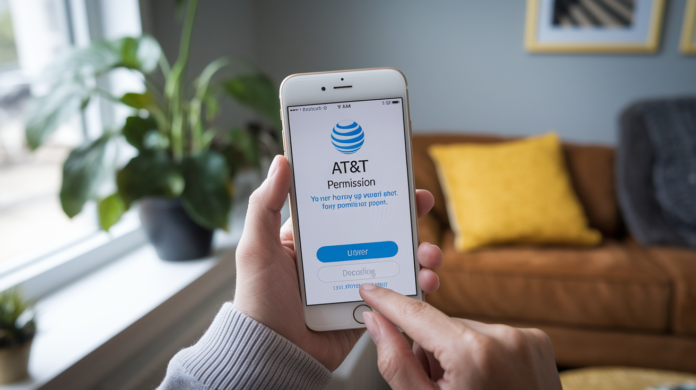

Did Apple just tighten the screws on cross-app tracking again?
A recent privacy update changes how App Tracking Transparency (ATT) works, and it reshapes access to the IDFA—the identifier advertisers used to follow users across apps.
That matters for developers, advertisers, and privacy-minded users because measurement, retargeting, and ad personalization all shift when tracking is blocked.
This post breaks down what changed, the real-world effects on opt-in rates and ad measurement, and the practical steps teams should consider next.
Understanding Apple’s App Tracking Transparency (ATT)

App Tracking Transparency dropped with iOS 14.5 in April 2021, and it rewired how apps collect and share user data across mobile advertising. ATT forces every app to show a system prompt asking for explicit permission before tracking users across apps and websites owned by other companies. The prompt uses Apple’s wording to explain what tracking means in plain language, putting control directly in users’ hands for the first time.
At the technical core of ATT sits the Identifier for Advertisers (IDFA), a random device identifier that advertisers previously used to build cross-app user profiles for targeted advertising. Before ATT, apps could grab the IDFA without asking. After ATT, the IDFA automatically becomes a string of zeros unless a user taps “Allow” on the tracking prompt. This single change cut off the primary method advertisers used to follow users from app to app, forcing the entire mobile ad industry to redesign measurement and targeting systems.
ATT matters because it addresses a long-standing privacy asymmetry. Users had little visibility into which apps were sharing their behavior data with third parties, and no practical way to stop it without turning off all personalized ads in a buried settings menu. By surfacing the choice at the moment an app wants to track, ATT gives users meaningful consent opportunities and creates accountability for apps that rely on cross-app data flows. The update affects tracking transparency by making tracking requests visible, auditable, and blockable at the system level.
ATT’s core components include:
System permission prompt that appears when an app requests tracking authorization, using consistent Apple language across all apps
IDFA restriction enforcement that returns a zero value to apps when users decline tracking, eliminating the primary cross-app identifier
App Store Privacy labels that disclose what data each app collects and whether it’s used for tracking, displayed on every app’s product page
Developer guidelines and review requirements that define what counts as tracking and mandate the use of ATT APIs for any cross-app data use
User settings in Privacy → Tracking where users can review which apps have requested tracking and revoke permissions after granting them
How ATT Changed Access to the IDFA

Before App Tracking Transparency, the IDFA was accessible to any app by default. Developers could read the identifier without asking permission, enabling advertisers to build detailed behavioral profiles by linking a user’s activity across dozens of apps. Advertisers used the IDFA to power attribution systems that tracked which ads led to installs, retargeting campaigns that followed users across apps, and lookalike audiences built from cross-app behaviors. The only way users could limit IDFA access was to enable “Limit Ad Tracking” in a settings menu most people never found.
After ATT, the IDFA gets zeroed out unless a user explicitly opts in through the tracking prompt. When an app calls the IDFA without permission, iOS returns a string of zeros instead of the device’s actual identifier. This single technical change cascaded through every part of mobile advertising that depended on deterministic, user-level tracking. Attribution became probabilistic or aggregated. Retargeting audiences shrank dramatically. And measurement vendors lost the ability to tie post-install events back to specific ad impressions with certainty.
| Before ATT | After ATT |
|---|---|
| IDFA accessible by default to all apps | IDFA zeroed out unless user opts in via prompt |
| Deterministic attribution across full user journey | Attribution limited to aggregated postbacks or probabilistic modeling |
| Retargeting reaches users across all apps using IDFA | Retargeting only possible for users who opted in, or via contextual signals |
| Granular event-level data tied to individual users | Aggregated conversion values with 24–48 hour delays; no user-level detail |
Advertiser and Marketer Impact

Advertisers experienced immediate and measurable consequences when ATT rolled out. Attribution precision dropped sharply because most users declined tracking, cutting off the IDFA signal that powered multi-touch attribution models. Campaign performance measurement shifted from real-time, event-level data to delayed, aggregated postbacks through Apple’s SKAdNetwork. The 24 to 48 hour postback window meant advertisers could no longer optimize campaigns based on same-day conversion signals, introducing lag that reduced the effectiveness of automated bidding and budget allocation.
Acquisition costs rose as targeting precision declined. Without cross-app behavioral data, lookalike audiences became less accurate, and retargeting pools shrank to only those users who opted in. Advertisers reported higher cost per install and lower return on ad spend in the months following ATT enforcement, particularly for performance campaigns that relied on granular user segmentation. Small and mid-sized businesses got hit hardest because they lacked the scale to absorb efficiency losses or the resources to rebuild measurement infrastructure around SKAdNetwork and first-party data systems.
Budget allocation shifted toward platforms and tactics less affected by ATT. Some advertisers increased spend on Android, where tracking restrictions arrived later and with more fragmentation. Others moved budget into owned channels like email, SMS, and web retargeting using first-party cookies. Creative testing became a primary lever for performance improvement because targeting levers were no longer available. The loss of granular cohort data also made it harder to identify which user segments drove long-term value, forcing marketers to rely on modeled lifetime value and probabilistic estimates instead of deterministic user data.
The biggest measured advertiser pain points post-ATT include:
Attribution delays. SKAdNetwork postbacks arrive 24 to 48 hours after install, eliminating real-time optimization for fast-moving campaigns.
Loss of event granularity. Aggregated conversion values replace detailed event streams, hiding which specific actions users took post-install.
Retargeting audience collapse. Retargeting pools shrank by 60 to 80% as the majority of users opted out, reducing campaign reach and frequency.
Increased customer acquisition costs. CPIs rose 20 to 40% in many verticals due to reduced targeting precision and smaller addressable audiences.
Measurement fragmentation. Advertisers now juggle SKAdNetwork, probabilistic attribution, and first-party data without a unified view.
Reduced ability to measure incrementality. Loss of user-level control groups makes it harder to isolate true ad-driven lift from organic growth.
User Behavior and Opt-In Rates

Real-world opt-in rates settled between 25% and 30% globally in the months following ATT’s mandatory enforcement in April 2021. Early projections had anticipated opt-in rates as low as 5 to 10%, so the observed rates were higher than many advertisers feared. Opt-in rates vary significantly by app category, with gaming apps seeing rates near 40% and social or data-intensive apps often seeing rates below 20%. Prompt timing, messaging clarity, and the perceived value exchange all influence whether users tap “Allow” or “Ask App Not to Track.”
Apps that display the ATT prompt immediately on first launch see lower opt-in rates than apps that wait until users have experienced core functionality. Pre-prompt explainer screens that describe why tracking is requested and what benefits users receive can increase opt-in rates by 10 to 20 percentage points. For example, a gaming app that explains “Allow tracking to see personalized offers and connect with friends” before the system prompt tends to see higher consent than an app that displays the prompt with no context. User trust in the app and brand recognition also matter. Well-known brands and apps with strong user satisfaction tend to see higher opt-ins.
The three major factors influencing opt-ins are:
Timing and context of the prompt. Displaying the request after users have engaged with the app and understand its value increases willingness to grant permission.
Clarity of the value exchange. Users are more likely to opt in when the benefit to them (personalized content, rewards, feature access) is clearly communicated before the system prompt appears.
App category and user expectations. Users expect and tolerate tracking more readily in free-to-play games and utility apps than in privacy-sensitive categories like health, finance, or messaging.
How ATT Affects Users’ Privacy and App Experience

Users gained visibility and control over cross-app tracking that was previously invisible. The ATT prompt surfaces tracking requests at the moment they occur, and the App Store’s Privacy labels let users review what data an app collects before downloading. Users who decline tracking are no longer profiled across apps by ad networks and data brokers, reducing the amount of behavioral data that flows into third-party databases. This means fewer companies can build detailed user profiles based on app usage patterns, location history, and in-app behaviors.
The trade-off is that ads become less personalized for users who opt out. Instead of seeing ads tailored to recent shopping behavior or interests demonstrated in other apps, opted-out users see more generic or contextual ads. Some apps also gate features or content behind the tracking prompt, asking users to opt in to unlock rewards, social features, or premium content. While Apple’s guidelines prohibit making core functionality conditional on tracking consent, enforcement is inconsistent, and some developers continue to use permission requests as soft gates to encourage opt-ins.
Platform-Specific Case Studies: Social, Gaming, and Ecommerce Apps

Social Platforms
Social platforms experienced severe attribution loss and revenue impact following ATT. Facebook’s Audience Network, which serves ads across thousands of third-party apps and websites, lost the ability to reach iOS users who opted out of tracking. Facebook publicly warned that ATT would reduce targeting precision and limit audience sizes, and Meta’s 2022 earnings reports attributed billions in lost revenue to iOS privacy changes. Return on ad spend became volatile as attribution windows shortened and event-level data disappeared, making it harder for advertisers to measure the true performance of Facebook and Instagram campaigns driving app installs.
Gaming Apps
Gaming apps saw higher opt-in rates than most other categories, often reaching 35 to 40%, because users value personalized content, in-game offers, and social features tied to tracking. Free-to-play games that rely on in-app purchases adjusted monetization strategies by emphasizing early conversion events within the 24-hour SKAdNetwork window. Developers mapped tutorial completion, first purchase, and level milestones to conversion values to signal high-intent users to ad networks. The shift to aggregated measurement forced game studios to rely more on creative testing and broader targeting, but the higher opt-in rates softened the overall impact compared to other verticals.
Ecommerce Brands
Ecommerce brands pivoted to server-side measurement and first-party data strategies to maintain attribution visibility. Brands with strong email lists and loyalty programs began using hashed email addresses and customer identifiers to build retargeting audiences and measure conversions outside of IDFA systems. Many ecommerce advertisers also increased investment in web campaigns where cookie tracking still functioned, and adopted tools like Facebook’s Conversions API to send server-side event data that bypassed the iOS client. The loss of granular in-app behavioral data made it harder to optimize for lifetime value, pushing brands to focus on first-purchase metrics and Day 1 engagement signals that SKAdNetwork could still capture.
Strategies Businesses Use to Adapt After ATT

Businesses rebuilt measurement and targeting strategies around first-party data and privacy-compliant signals. Companies invested in collecting zero-party and first-party data through onboarding flows, account creation, email capture, and loyalty programs. By building direct relationships with users, brands reduced reliance on third-party tracking and created proprietary data assets that could power segmentation, personalization, and retargeting without the IDFA. Customer data platforms and CRM systems became critical infrastructure for stitching together user behavior across channels and devices using consented identifiers.
Optimizing the ATT prompt itself became a high-leverage tactic. Marketers tested pre-prompt explainer screens that framed the tracking request in terms of user benefits, such as personalized content, exclusive offers, or enhanced app features. Apps that invested in clear, benefit-focused messaging before the system prompt saw opt-in rates increase by 10 to 30%. Timing also mattered. Delaying the prompt until after users completed onboarding or experienced core value increased the likelihood of consent because users had context for why tracking might improve their experience.
SKAdNetwork optimization required technical and strategic adjustments. Advertisers redesigned conversion value schemas to map early in-app events to long-term value, assigning higher conversion values to actions like tutorial completion, first purchase, or subscription sign-up within the first 24 to 48 hours. Because SKAdNetwork reports only aggregated postbacks with a delay, marketers shifted KPIs toward Day 1 engagement, modeled lifetime value, and cohort metrics instead of user-level attribution. Incrementality testing using geo splits or holdout groups became essential for validating campaign lift without deterministic tracking.
Tactical adaptation steps businesses adopted include:
First-party data collection through onboarding and value-exchange opt-ins. Using reward gates, account creation, and benefit-driven prompts to gather consented user data that replaces IDFA signals.
Pre-prompt explainer screens. Displaying a custom screen before the ATT prompt that explains why tracking is requested and what users gain by opting in, increasing consent rates.
SKAdNetwork conversion value mapping. Assigning conversion values to early high-intent actions (sign-ups, first purchase, level completion) within 24 hours to signal user quality to ad platforms.
Creative testing and iteration. Treating creative as the primary performance lever and running frequent tests to compensate for reduced targeting precision and smaller audiences.
Incrementality measurement using geo-splits and holdouts. Running controlled experiments that measure true ad-driven lift without relying on user-level attribution, validating campaign effectiveness in a privacy-safe way.
Final Words
Apple’s privacy update affects app tracking transparency in three big ways: it restricts access to the IDFA unless users opt in, it forces apps to ask permission before tracking, and it pushes advertisers toward aggregated measurement tools like SKAdNetwork.
The shift reshaped how marketers plan campaigns, measure performance, and allocate budgets. Users gained control. Businesses adapted with better prompts, first-party data strategies, and creative testing.
If you’re planning iOS campaigns or building apps that rely on attribution, understanding ATT isn’t optional anymore. It’s the baseline for working inside Apple’s ecosystem without surprises.
FAQ
Q: Is that iPhone app spying Apple’s app privacy report revealing all?
A: Apple’s App Privacy Report doesn’t reveal everything. It lists app sensor and network access, domains contacted, and background activity, but it won’t show all tracking methods, raw data, or third‑party linking.
Q: Should I turn off privacy preserving ad measurement on my iPhone?
A: Turning off privacy-preserving ad measurement on your iPhone removes Apple’s aggregated, privacy-focused ad reporting and can let apps seek less-private attribution methods; keep it enabled for better privacy unless you need exact ad-level reporting.
Q: How do I stop Apple from listening to my conversations?
A: To stop Apple from listening to your conversations, disable Siri and Dictation, turn off “Listen for Hey Siri,” revoke microphone permission for apps, and opt out of voice analytics and audio sharing in Settings.
Q: What is app tracking transparency Apple?
A: App Tracking Transparency (ATT) is Apple’s privacy rule that requires apps, since iOS 14.5, to ask users for permission before tracking them across apps and websites and prevents IDFA access unless users opt in.