


You can’t legally sell a consumer device without passing regulatory checks first.
Skip mandatory testing and you risk customs seizures, recalls, big fines, and lasting brand damage.
Regulations differ by market, but the goals are consistent: limit interference, prevent shocks and fires, cut toxic materials, and require basic cybersecurity.
This post walks through the core certifications—FCC, CE, RoHS, UL, EMC, battery and charger tests—and shows who needs what, when to test, and how to avoid costly rework.
If you’re launching hardware, consider this your compliance checklist.
Core Regulatory Certifications Required for New Consumer Devices

You can’t sell a consumer device legally without passing regulatory checks first. Every major market enforces technical and safety standards before clearance. Skip mandatory testing and you’re looking at customs seizures, forced recalls, heavy fines, and serious brand damage. For manufacturers, compliance isn’t something you tack on at the end. It’s baked into the development timeline.
Certification requirements differ by region, but the goals are pretty consistent: stop devices from interfering with other electronics, protect users from shock and fire, limit toxic materials, ensure basic cybersecurity. In the US, the FCC regulates radio-frequency emissions. In the EU, the CE marking system covers safety, electromagnetic compatibility, and radio performance. Most devices need to satisfy multiple regimes at once, and proof of compliance is standard for retail partnerships and online marketplace listings.
Six certifications form the baseline for most consumer electronics:
FCC authorization (US) controls RF emissions and requires equipment authorization for intentional radiators like Wi‑Fi and Bluetooth devices.
CE marking (EU) is an umbrella covering the Low Voltage Directive, Electromagnetic Compatibility Directive, Radio Equipment Directive, and others.
RoHS compliance (EU and many US states) restricts lead, mercury, cadmium, hexavalent chromium, and other hazardous substances in electronic assemblies.
UL certification (US) is technically voluntary but widely required by retailers and insurers to verify fire and shock protection.
EMC testing measures both emissions (interference radiated or conducted by the device) and immunity (how well it resists external electrical disturbances).
Safety testing evaluates insulation, grounding, enclosure flammability, thermal performance, and mechanical hazards under normal and fault conditions.
These certifications create a filter that catches unsafe designs, reduces cross-border regulatory conflicts, and gives end users minimum assurance that a device won’t interfere with their network, catch fire during charging, or leach heavy metals. Passing all applicable checks is the price of market access.
Regional Regulatory Frameworks and Market Differences

The US and EU take different approaches to electronics regulation. The US system assigns agencies to narrow domains: the FCC handles radio spectrum and emissions, the Consumer Product Safety Commission enforces product safety laws, the Department of Energy governs energy efficiency. Compliance is shown through supplier declarations (SDoC) and formal certifications issued by FCC-recognized Telecommunication Certification Bodies. UL certification is technically voluntary, but nearly universal for mains-powered devices because major retailers and insurers demand it. The US responsible party listed on FCC paperwork must maintain a domestic address, and test labs must be FCC-accredited for intentional-radiator approvals.
The EU consolidates electronics rules under the CE marking framework. Manufacturers self-assess conformity or engage Notified Bodies where directives require third-party review. The Low Voltage Directive applies to devices operating between 50–1000 V AC or 75–1500 V DC. The EMC Directive ensures devices don’t emit excessive interference or fail under typical electrical disturbances. The Radio Equipment Directive covers wireless and telecommunications equipment, including cybersecurity obligations that became mandatory on 1 August 2025 under Articles 3.3(d), (e), and (f). A single device might need to comply with four or five overlapping directives, each citing harmonized European standards. The manufacturer issues an EU Declaration of Conformity, retains technical documentation for ten years, and affixes the CE mark. No central EU agency pre-approves products before sale.
Asian markets add more marks and approvals. China requires CCC (China Compulsory Certification) for products on a published catalog, enforced by the Certification and Accreditation Administration. Japan mandates PSE (Product Safety Electrical Appliance & Material) marking with Type A (self-declaration) and Type B (third-party certification) tracks. South Korea uses KC (Korea Certification), which replaced older marks in 2011, and requires testing by Korea Testing Laboratory or equivalent accredited bodies. These systems rarely accept foreign test reports without re-verification, forcing manufacturers to budget separate lab campaigns per target market.
Device‑Specific Compliance Considerations
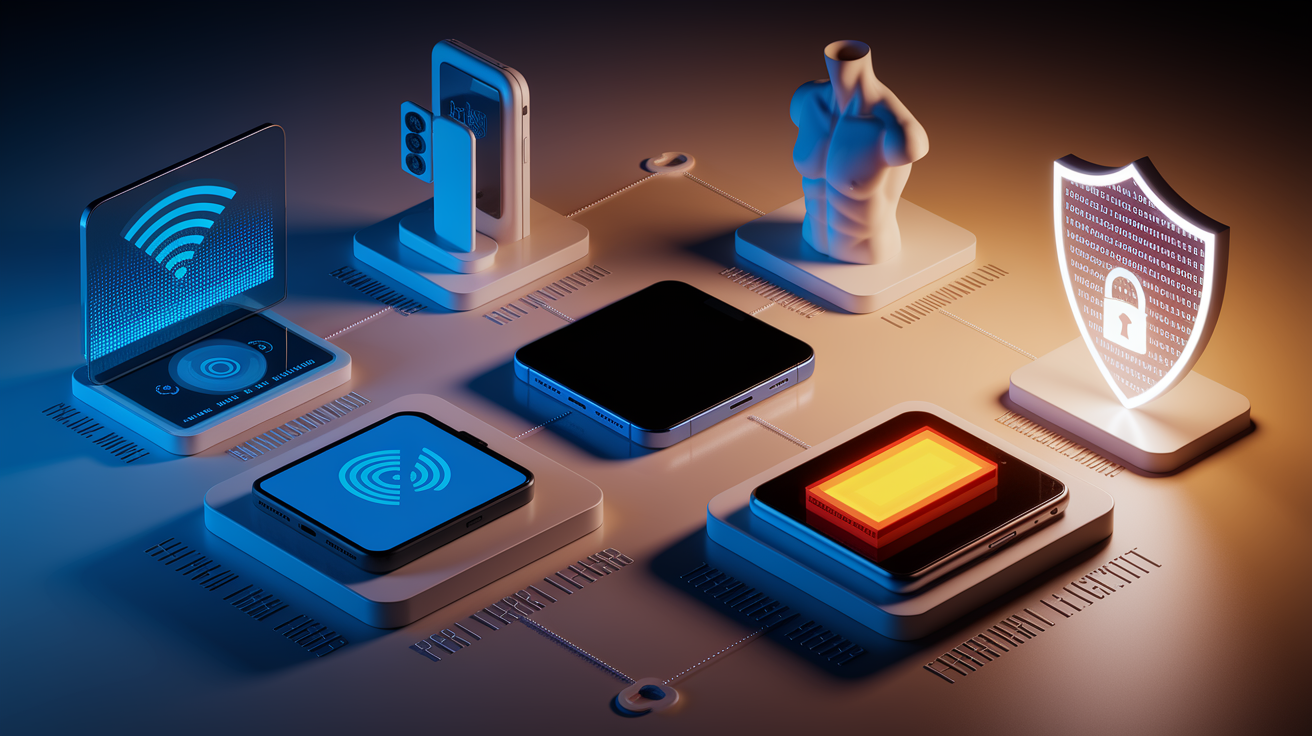
Devices that transmit radio signals trigger the strictest certification paths. A smartphone must pass FCC Part 15 intentional-radiator rules in the US and RED compliance in the EU, including specific absorption rate (SAR) testing to ensure RF energy absorbed by human tissue stays below 1.6 W/kg (US) or 2.0 W/kg (EU) limits. Bluetooth earbuds, Wi‑Fi routers, GPS trackers, wireless webcams all fall into the intentional-radiator category and require full equipment authorization. An accredited lab conducts formal emissions and immunity tests, and a TCB or Notified Body issues the certificate. Using a pre-certified RF module (an FCC‑approved Wi‑Fi chipset, for instance) can reduce the scope of testing because the module’s radio performance has already been validated. But the final product assembly still needs EMC and safety checks.
Battery-powered and rechargeable devices add safety and transportation layers. Lithium-ion batteries must pass UN 38.3 testing (altitude simulation, thermal cycling, vibration, shock, external short circuit, impact, overcharge, forced discharge) before air shipment. Many jurisdictions also require IEC 62133 or UL 2054 battery-safety certification. Chargers and power adapters need energy-efficiency testing under DOE 10 CFR Part 430 in the US or the EU Ecodesign Directive, and many retailers now insist on USB-C charging ports to comply with Directive (EU) 2022/2380, which mandates USB‑C on smartphones, tablets, cameras, headphones, and handheld game consoles sold in the EU (laptop requirement starts April 2026). A smart watch that charges wirelessly still needs documentation showing the charging pad meets applicable efficiency thresholds and doesn’t emit excessive electromagnetic fields.
Four critical testing areas for connected and battery devices:
Wireless performance and emissions covers conducted and radiated RF output, spurious emissions, frequency stability, and occupied bandwidth measured in an anechoic chamber.
SAR limits involve phantom-head or torso testing for devices held near the body. Results must stay below regulatory thresholds to protect users from excessive RF exposure.
Battery and charger safety includes mechanical abuse tests (crush, nail penetration), thermal runaway simulation, overcharge protection verification, and insulation resistance checks.
Cybersecurity baselines follow EU RED Articles 3.3(d–f), which require devices with network connectivity to implement protections against unauthorized access, maintain data confidentiality and integrity, and provide security updates. ETSI EN 303 645 is the primary referenced standard.
Step‑by‑Step Certification and Testing Process
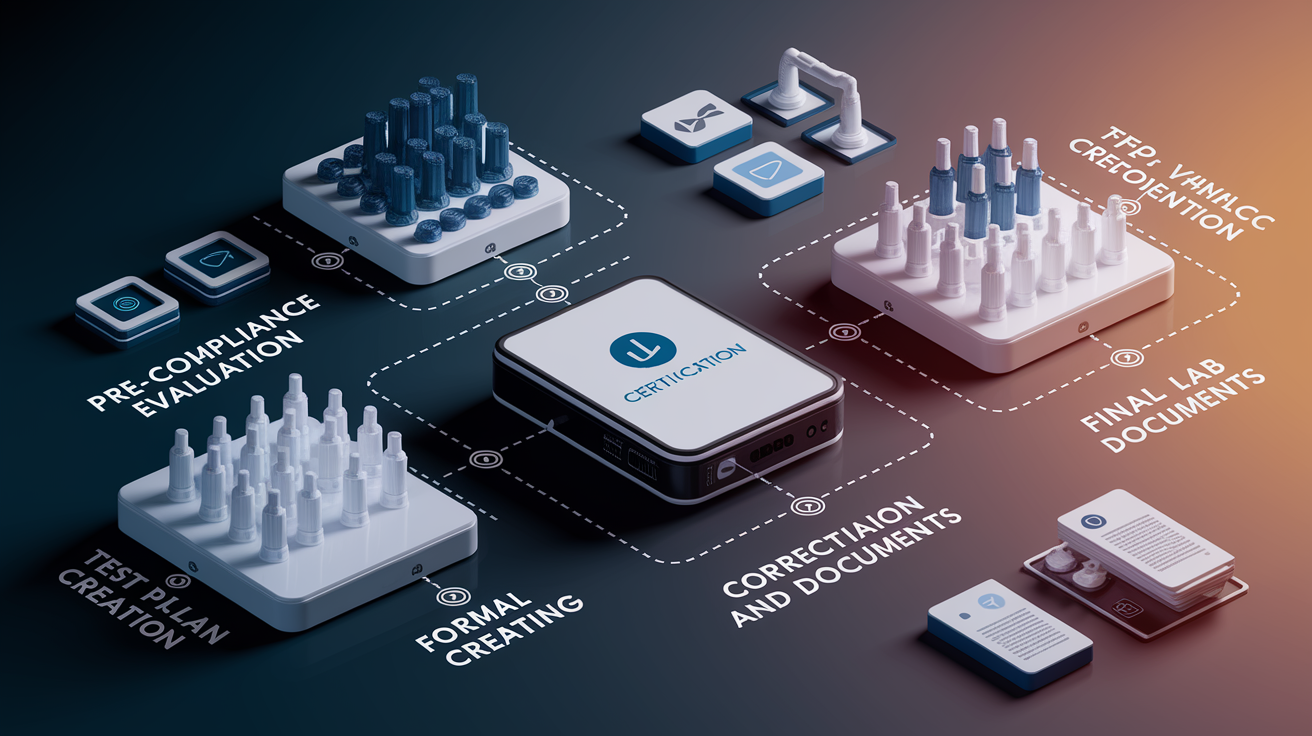
Early engagement with regulatory requirements prevents expensive redesign cycles. The first step is determining which regulations apply. Map the device’s features (wireless radios, mains power, battery type, intended user age) to the certification matrix for each target market. An IoT sensor with Bluetooth and a lithium battery sold in the US and EU will need FCC intentional-radiator certification, CE marking under RED and EMC directives, RoHS substance testing, battery UN 38.3 clearance, and possibly UL listing if sold through major retailers. Waiting until production samples arrive to start analysis guarantees delays.
Pre‑compliance evaluation means conducting internal or consultant-led reviews of schematics, PCB layout, enclosure materials, and component datasheets against target standards. Identify high-risk areas such as noisy clock generators, undersized filter capacitors, or missing ESD protection. Many engineering teams run informal EMC scans using near-field probes or spectrum analyzers to catch obvious emissions issues before formal testing.
Test plan creation and lab booking involves selecting accredited test labs (FCC-recognized for US intentional radiators, ISO/IEC 17025 accredited and, where required, notified by an EU member state). Request a detailed test plan that lists every standard, test method, and sample requirement. Book lab slots before finalizing the production design. Popular labs often have 4–8 week lead times.
Formal lab testing requires shipping production-representative samples with complete documentation: bill of materials, user manual draft, schematics, and any pre-test data. The lab performs the full test suite (emissions, immunity, safety, radio performance) and issues a detailed report noting any failures and margin to limits.
Corrective actions and retest come into play when the device fails. Common on first attempts. The test report identifies the failure mode. Conducted emissions might exceed FCC Part 15 Class B limits at certain frequencies, requiring additional input filtering or PCB routing changes. After design changes, retest only the affected sections to save cost, or run the full suite again if changes were extensive.
Final documentation and filing compiles the Declaration of Conformity (EU), FCC filing via the TCB (US), UL certificate, RoHS test reports, and REACH substance declarations. Maintain technical files for the legally required retention period (typically 10 years in the EU, indefinitely in the US for active product lines).
Starting compliance planning during the concept phase reduces the chance that a device will fail late-stage testing and force a costly board respin. Choosing pre-certified modules, designing adequate grounding and shielding, budgeting for certification costs early. Every week saved in the lab translates directly to faster time to market.
Testing Timelines, Costs, and Common Delays

Budget 4–10 weeks for straightforward single-radio devices (a Bluetooth speaker) and 8–16 weeks for complex multi-radio products (a smartphone with cellular, Wi‑Fi, Bluetooth, NFC, and GPS). These windows assume production-ready samples, complete documentation, and first-pass success on all tests. Real-world projects frequently encounter at least one retest cycle, adding 2–4 weeks per iteration. Devices requiring Notified Body involvement (medical wearables, certain RED categories) can stretch timelines to several months because NBs operate on fixed review schedules.
Certification costs vary widely by device complexity and number of target markets. A simple unintentional radiator qualifying for FCC Supplier’s Declaration of Conformity might cost $1,500–$3,000 for third-party EMC testing, even though self-declaration is allowed. Intentional radiators (Wi‑Fi routers, wearables, IoT hubs) typically range from $5,000 to $15,000 for combined FCC and IC (Canada) certification. Adding CE marking with full RED and EMC testing pushes the total to $12,000–$25,000. UL listing for a mains-powered device starts around $5,000 for simple products and can exceed $50,000 for complex systems requiring factory audits and ongoing surveillance. RoHS and REACH substance testing generally add $1,000–$3,000 per product variant. A flagship consumer device targeting global launch (US, EU, China, Japan) can easily carry $40,000–$80,000 in direct certification expenses before factoring in engineering time for corrective actions.
Common causes of schedule and budget overruns:
Failed EMC emissions tests mean radiated or conducted interference exceeds limits. Requires PCB redesign, shielding, or component swaps.
Battery safety issues include cell venting, thermal runaway, or inadequate protection circuits discovered during UN 38.3 or IEC 62133 testing.
Incorrect or incomplete documentation involves missing schematics, unsigned declarations, or non-English user manuals that delay TCB or Notified Body review.
Design flaws surfaced late cover insufficient creepage/clearance distances, flammable enclosure materials, or missing safety interlocks found during UL evaluation.
Insufficient pre‑testing happens when teams skip internal EMC scans or prototype ESD checks and face multiple formal-test failures, each costing weeks and additional lab fees.
Risk-reducing tactics include running early Design for EMC reviews, ordering pre-certified RF modules, conducting thermal and mechanical stress tests in-house, maintaining a compliance checklist that tracks every required document and test from day one.
Working With Accredited Labs and Maintaining Documentation

Accreditation under ISO/IEC 17025 ensures a test lab operates to internationally recognized quality and competence standards. For FCC intentional-radiator certifications, the lab must appear on the FCC’s list of accredited facilities and must not be affiliated with entities prohibited under Title 47 § 2.902 (a rule effective since 2025 barring labs connected to certain foreign companies). In the EU, Notified Bodies are designated by member-state authorities and listed in the NANDO (New Approach Notified and Designated Organisations) database. Only an NB can issue certificates for directives that mandate third-party conformity assessment. Choosing the wrong lab (one that lacks the necessary scope or accreditation) invalidates test results and forces expensive retesting.
When selecting a lab, verify its accreditation certificate covers the exact standards you need. Request a sample test report to check clarity and detail. Ask about turnaround time, retest policies, and whether the lab offers pre-compliance or engineering consulting services to catch issues before formal testing. Many experienced labs provide “pre-scan” services at lower hourly rates, identifying likely failure points and recommending design tweaks. Labs located in major manufacturing regions (Shenzhen, Taipei, Southern California) often have faster sample logistics and lower per-test costs than facilities in smaller markets. Always confirm mutual recognition agreements or specific market acceptance before booking offshore testing.
Technical documentation must be retained for the lifetime of the product in most markets. Indefinitely in the US for active models, at least 10 years after the last unit is placed on the EU market. Required files include final test reports (EMC, safety, RF, SAR, battery), bill of materials with part numbers and RoHS/REACH declarations from suppliers, schematics and PCB layout files, risk assessments, user manuals, EU Declaration of Conformity or FCC filing confirmation, UL certificates, and any third-party cybersecurity audit reports. Market surveillance authorities in the EU and enforcement actions by the FCC or CPSC frequently demand this documentation during investigations or spot checks.
Ongoing compliance becomes critical when you update hardware, firmware, or key components. A seemingly minor change (swapping an electrolytic capacitor for a ceramic type, updating Bluetooth stack firmware, or moving to a new PCB vendor) can alter EMC performance or safety margins enough to require partial or full retesting. Maintain a formal Engineering Change Order (ECO) process that flags regulatory-relevant changes and routes them through a compliance review. Some companies establish internal “compliance gates” at each design milestone, requiring sign-off from a regulatory engineer before moving to the next phase. This discipline prevents the scenario where a cost-reduction component swap two months before launch invalidates existing certifications and forces an emergency retest cycle.
Final Words
Start with certification early: this article laid out the core certifications (FCC, CE, RoHS, UL, EMC, safety), how regions differ, device‑specific tests like RF and battery checks, and a step‑by‑step certification workflow.
Build realistic timelines and budgets, pick ISO/IEC 17025 labs, and keep technical files ready so tests and audits don’t stall development.
If you need a quick takeaway, this guide explains what regulatory checks new consumer devices must pass — follow the steps and you’ll get to market with fewer surprises.
FAQ
Q: Do all electronics need FCC certification?
A: Not all electronics need FCC certification. FCC rules apply to devices that intentionally or unintentionally emit radio‑frequency energy (Wi‑Fi, Bluetooth, cellular); purely passive wired products usually follow different safety or EMC checks.
Q: What are the CPSC requirements?
A: The CPSC requirements are U.S. product safety rules that mandate applicable consumer goods meet safety standards, carry correct labeling, undergo third‑party testing when required, include certificates of compliance, and report incidents promptly.
Q: What is the FCC compliance?
A: The FCC compliance is meeting U.S. rules on radio‑frequency emissions, including equipment authorization (Certification or Declaration of Conformity), required labeling, and retaining test reports and technical files proving emission and interference limits are met.
Q: Which regulation governs electronic items?
A: Which regulation governs electronic items depends on market and product; common frameworks are FCC and CPSC in the U.S., CE/RoHS in the EU, China CCC, Japan PSE, and Canada ISED for safety, EMC, and hazardous substances.